



Hepatitis A Virus

Included on this page:
Epidemiologic Summary
Current situation: During the first six months of 2026, no cases of hepatitis A were reported in Barnstable County. Public health officials will continue to monitor for potential risks and will provide updates and recommend any necessary precautions if conditions change.
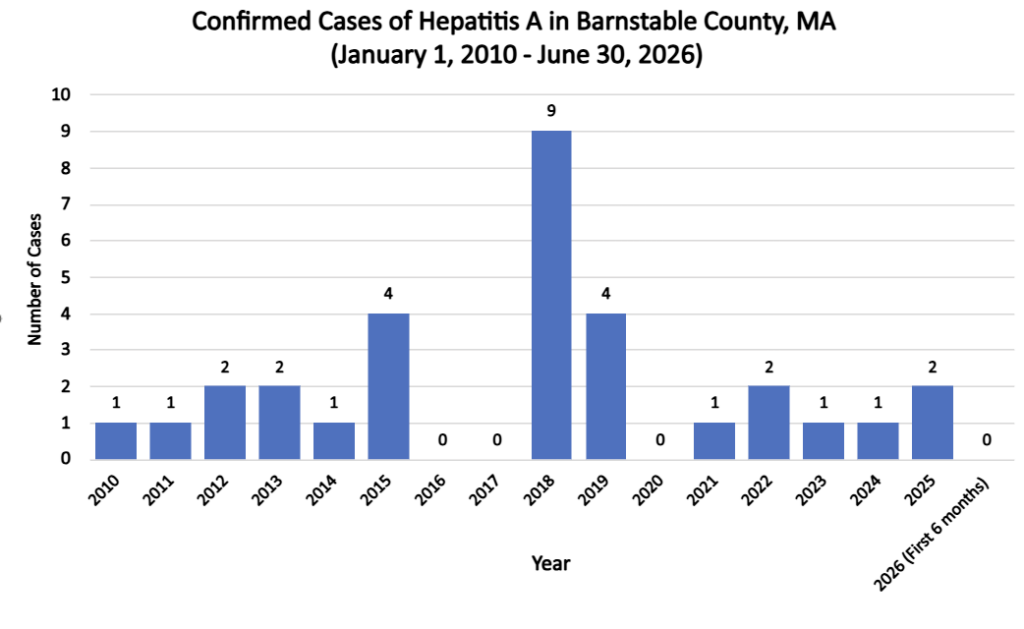
The high number of cases of Hepatitis A in 2018 and 2019 are due to a multi-state outbreak of Hepatitis A among people experiencing homelessness and people who use drugs. Nationwide, these populations have been particularly susceptible to infection and spread and are strongly recommended to be vaccinated against hepatitis A. For more information, download the “MDPH 2024 Viral Hepatitis Surveillance Report (Hepatitis A, B, and C).”
Confirmed Cases of Hepatitis A, by County in the Cape & Islands, MA
| Year | Barnstable County (Cape Cod) | Dukes County (Martha's Vineyard, Elizabeth Islands) | Nantucket County (Nantucket, Tuckernuck) |
|---|---|---|---|
| 2026 (Jan-June) | 0 | -- | -- |
| 2025 | 2 | 0 | 0 |
| 2024 | 1 | 0 | 0 |
| 2023 | 1 | 0 | 0 |
| 2022 | 2 | 0 | 0 |
| 2021 | 1 | 0 | 0 |
| 2020 | 0 | 0 | 0 |
| 2019 | 4 | 0 | 0 |
| 2018 | 9 | 0 | 0 |
| 2017 | 0 | <5 | 0 |
| 2016 | 0 | 0 | 0 |
| 2015 | 4 | 0 | 0 |
| 2014 | 1 | 0 | 0 |
| 2013 | 2 | 0 | 0 |
| 2012 | 2 | 0 | 0 |
| 2011 | 1 | 0 | 0 |
| 2010 | 1 | <5 | <5 |
Frequently Asked Questions
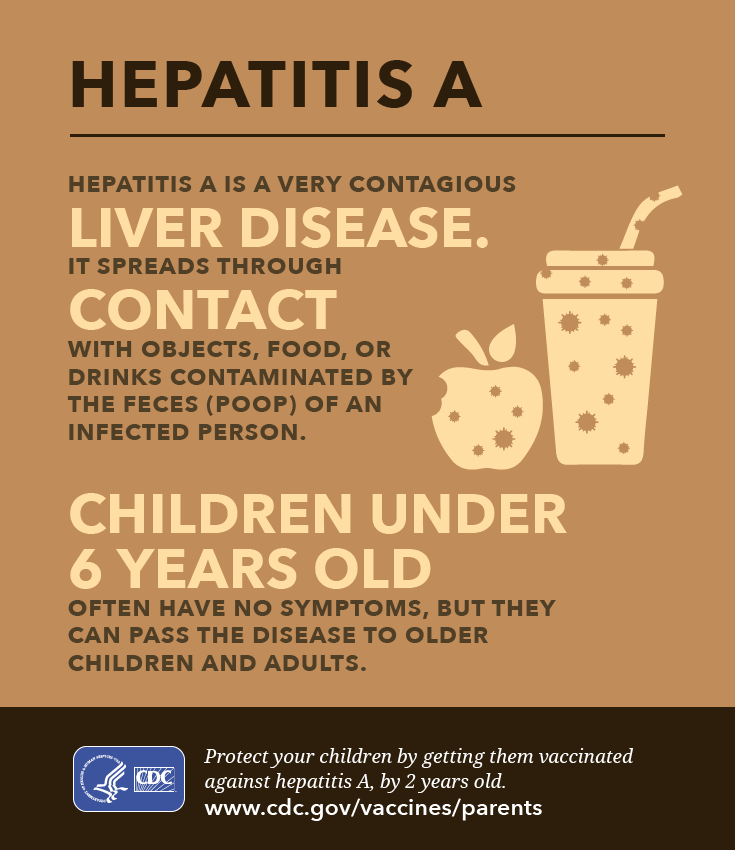
Hepatitis A is a liver infection caused by the hepatitis A virus. It is highly contagious and can be spread easily from one person to another. The disease is rarely fatal and does not cause chronic (long-term) infection or liver disease. Once a person has had hepatitis A, they cannot get it again. There is a vaccine to prevent hepatitis A infection.
The hepatitis A virus is spread through stool (by the fecal-oral route). This means the disease is spread by putting something in the mouth that has been contaminated with the stool of an infected person. It is often spread when an infected person is not careful about washing their hands after using the bathroom. For this reason, people who live with or have sex with a person who has the infection are at high risk of catching it. The virus can also be spread in food-related businesses, such as restaurants, or where there is diaper-changing or caregiving like daycares.
Hepatitis A can be spread by eating contaminated food (such as raw or undercooked shellfish) or by drinking contaminated water. Outbreaks of hepatitis A have also occurred among people who use drugs and people experiencing homelessness.
Hepatitis A can also be found more commonly in other countries. Travelers can get hepatitis A after eating contaminated food or drinking contaminated beverages. It is recommended to get vaccinated for Hepatitis A before international travel. See the CDC’s Think Travel Vaccine Guide and country-specific recommendations.
If you are a food handler (either paid or unpaid) and have been exposed to hepatitis A virus, contact your local board of health immediately. They will assess the exposure, your health, and your immunity to provide further instructions. Food handlers include:
- People like cooks, waiters, dishwashers, bussers, bartenders, hosts/hostesses, staff in grocery stores, food processors as well as staff in daycares, assisted living, skilled nursing, or residential programs that serve food or snacks. Anyone who handles unpackaged food, food equipment, plates, utensils, trays, or food contact surfaces.
- Anyone who handles medication that will be going into someone else’s mouth. This includes but is not limited to healthcare workers.
- Anyone who provides mouth or denture care to another person.
If you have either already been vaccinated against hepatitis A, or have previously been infected with hepatitis A, you are immune and will not get it again.
If you are not immune and have been notified that you were exposed to Hepatitis A virus within the last 2 weeks (14 days), a single dose of Hepatitis A vaccine administered as soon as possible can prevent infection. The vaccine must be given within 14 days of exposure to be effective at preventing illness. If you have an underlying health condition that affects your immune system, consult your doctor. They may advise a different treatment—called immunoglobulin—to prevent infection.
If you are not already immune and have been unable to get the vaccine or immunoglobulin within 14 days of exposure, talk to your doctor about testing and monitoring for symptoms.
- Your doctor’s office
- Some pharmacies carry Hepatitis A vaccine. Pharmacies with online scheduling options include:
- A CDC travel clinic: Find a Clinic | Travelers’ Health | CDC
The symptoms of hepatitis A include:
- Fever
- Tiredness
- Loss of appetite
- Stomach pain
- Nausea or vomiting
- Diarrhea
- Jaundice, which can include:
- Yellowing of the skin and eyes
- Dark urine
- Clay or grey colored stools
Teens and adults are more likely to have these typical symptoms than children. Symptoms usually last less than two months. Some adults can feel sick for as long as six months, but this is rare.
Symptoms of hepatitis A, when they occur, appear 15 to 50 days after being exposed to the virus. Most often, they show about three to four weeks after exposure. Children are less likely to show symptoms of hepatitis A than adults. Even when someone does not have symptoms, they can pass the infection to others. If you have been exposed to hepatitis A, it is important to talk to your doctor.
Hepatitis A is diagnosed with a blood test. This blood test can tell the difference between current and past infection. There are also blood tests to measure if damage has been done to the liver, but these tests do not show what caused the damage.
There is no specific treatment for a person with hepatitis A. Rest and plenty of fluids are recommended. Some people may need to be hospitalized.
While hepatitis A usually resolves on its own, there are several important reasons why public health takes it very seriously, and why vaccination and outbreak response are essential:
It’s highly contagious, especially before symptoms appear.
People with hepatitis A can spread the virus up to two weeks before they feel sick. That means someone can unknowingly infect others through close contact or food handling. In group settings— restaurants, daycares, shelters, or correctional facilities—this can lead to outbreaks.
Not everyone gets mild illness.
While some people may have mild or no symptoms, older adults or people with underlying liver disease (including hepatitis B or C) are at higher risk for severe illness, liver failure, and even death.
Yes. Massachusetts law requires doctors to report cases of hepatitis A to the local board of health. Workers in any food-related business who have hepatitis A cannot work until their fever is completely gone and a week has passed since the symptoms started. Food-related businesses include restaurants, sandwich shops, hospital kitchens, and dairy or food-processing plants. This requirement also includes workers in schools, residential programs, daycare, and health care facilities who feed, give mouth care, or dispense medicines.
Follow the tips below. Good handwashing and hygiene habits can prevent hepatitis A—as well as other diseases:
- Always wash your hands thoroughly with soap and water before touching or eating food, after using the toilet, and after changing a diaper. When soap and water are not available, use alcohol-based disposable hand wipes or gel sanitizers.
- Don’t eat raw or undercooked shellfish.
- Always wash fruits and vegetables before eating them.
For long-term protection, hepatitis A vaccine is best. Vaccine is recommended for certain groups, including:
- All children at age 1 year
- Travelers to countries where hepatitis A is common (see CDC country-specific recommendations)
- Family and caregivers of recent adoptees from countries where hepatitis A is common
- Men who have sex with men
- People who use recreational drugs, whether injected or not
- People experiencing homelessness
- Persons who have chronic or long-term liver disease, including hepatitis C and hepatitis B
- People with HIV
Hepatitis A vaccine can also be used to prevent infection in someone who was recently exposed to the virus. Depending on the person’s age and health, their doctor may recommend that they receive immune globulin in addition to vaccine.
The hepatitis A vaccine is a safe and effective way to prevent hepatitis A infection prior to exposure, or when administered within two weeks of exposure. It stimulates the immune system to build protection against the virus without causing illness. Over 95% of adults and 97% of children and adolescents develop immunity within a month of the first dose of vaccine. A second dose given 6 months later results in 96–100% of children and adults developing lifelong immunity. Two doses complete the series.
Learn more about the hepatitis A vaccine at: Hepatitis A Vaccine | Hepatitis A | CDC
In the context of potential for a local outbreak, public health officials may recommend vaccination for food service employees, close contacts of a confirmed case, and people who ate or drank in establishment linked to a confirmed case.
Where I get more information?
- Your doctor, nurse, or health care clinic
- The Massachusetts Department of Public Health:
- General Information: www.mass.gov/info-details/hepatitis-a
- The Massachusetts Department of Public Health (DPH), Division of Epidemiology at (617) 983-6800
- The Centers for Disease Control and Prevention (CDC) website at: www.cdc.gov/hepatitis
Additional Resources and Information
- Hepatitis A | Mass.gov | General Information
- Hepatitis A | Mass.gov| Information for the Public
- Hepatitis A information for healthcare and public health professionals | Mass.gov
- Hepatitis A infection among persons experiencing homelessness and persons who use drugs | Mass.gov
- Hepatitis A | CDC | General Information
- Hepatitis A Vaccination: For Healthcare Providers | CDC