



Tick-borne Illness Information and Prevention
Welcome!
This page includes everything you need to know to enjoy Cape Cod’s beautiful scenery while staying safe and healthy. We will continue to be adding to this page, so be sure to come back and visit for new information.
Cape Cod is home to many beautiful things: gorgeous beaches, serene kettle ponds, rolling dunes, tasty seafood, and (unfortunately) a very healthy and abundant tick population.
In wintertime, we are less likely to encounter a tick because we’re less likely to be outside–and if we are, we’re bundled. However, fall through wintertime and into spring you can still encounter an adult deer tick. Unfortunately, these are our riskiest ticks for carrying an infectious disease. So, plan to dress tick smart as you enjoy the outdoors, all times of the year! See our top tips below.
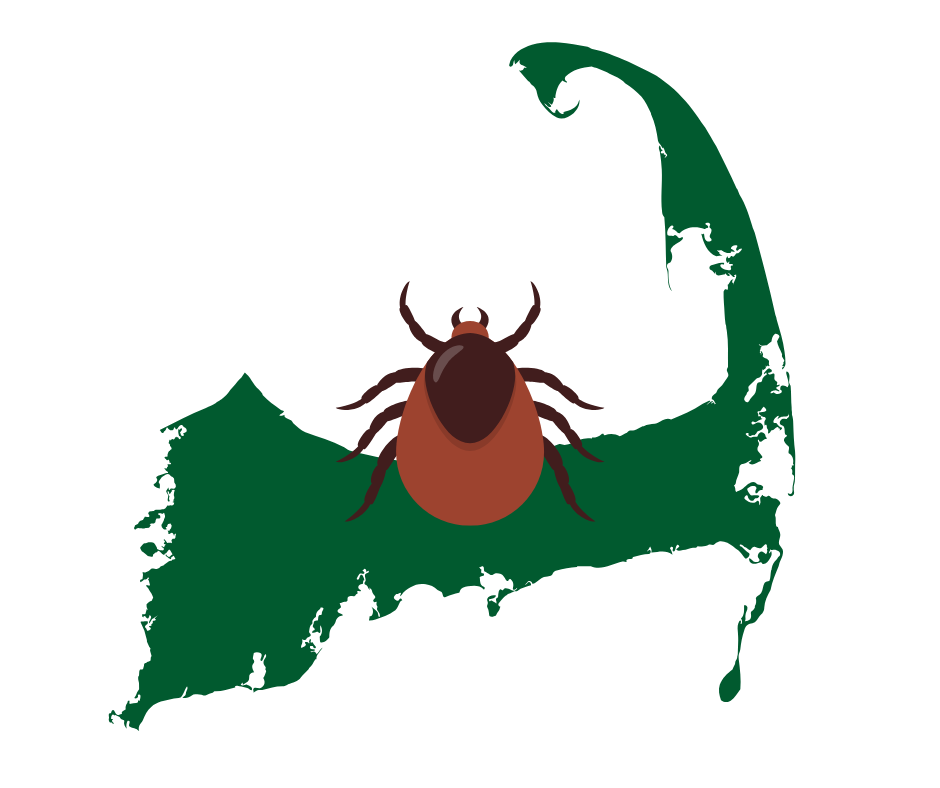
June 14, 2025: MA DPH Clinical Advisory for Practitioners
Single Dose Doxycycline as Postexposure Prophylaxis for Lyme Disease
For patients with a bite by a deer tick (Ixodes) in an endemic area for Borrelia burgdorferi (all of Massachusetts) AND attached for more than 36 hours, consider:
- Doxycycline 200 mg single dose (adult; children 4 mg/kg not to exceed 200 mg) given with food
- Counsel regarding tick-borne diseases including Lyme (prophylaxis not always effective), anaplasmosis, babesiosis, borreliosis (relapsing fever) and Powassan.
- Counsel on tick exposure prevention (EPA-approved repellants including permethrin, clothing and tick checks with prompt removal of attached ticks)
From our Contract Epidemiologist, Lea Hamner: Per CDC’s flowchart linked below, “Tick identification can be challenging, and PEP can still be considered when the tick cannot be identified.” To help with tick identification, University of Rhode Island’s TickSpotters can identify the tick from a photo for free. URI’s Field Guide to Ticks also has clues on how to identify ticks and the diseases they may carry.
There are 3 types of human-biting ticks on Cape Cod:
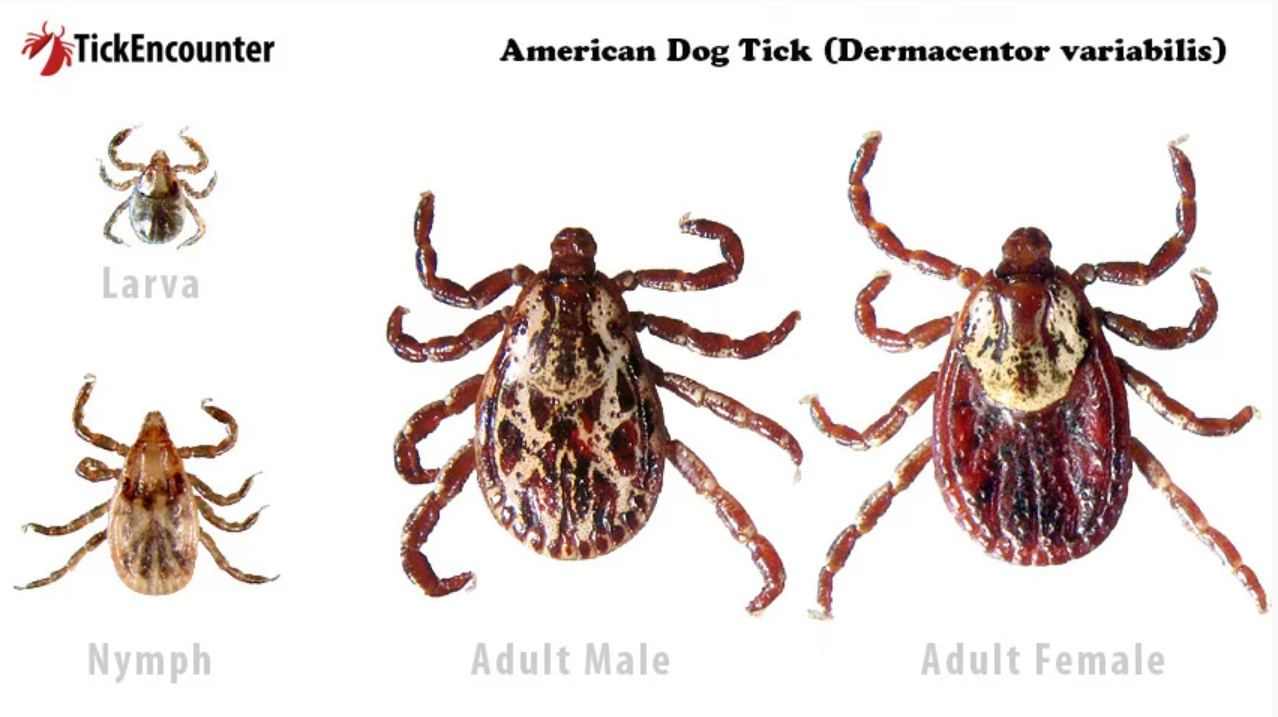
American Dog Tick – the original Cape Cod local
Large and clunky, these ticks can be spotted on the ends of dune grasses.
Only the adult stage is known to bite humans and are active from spring to fall.
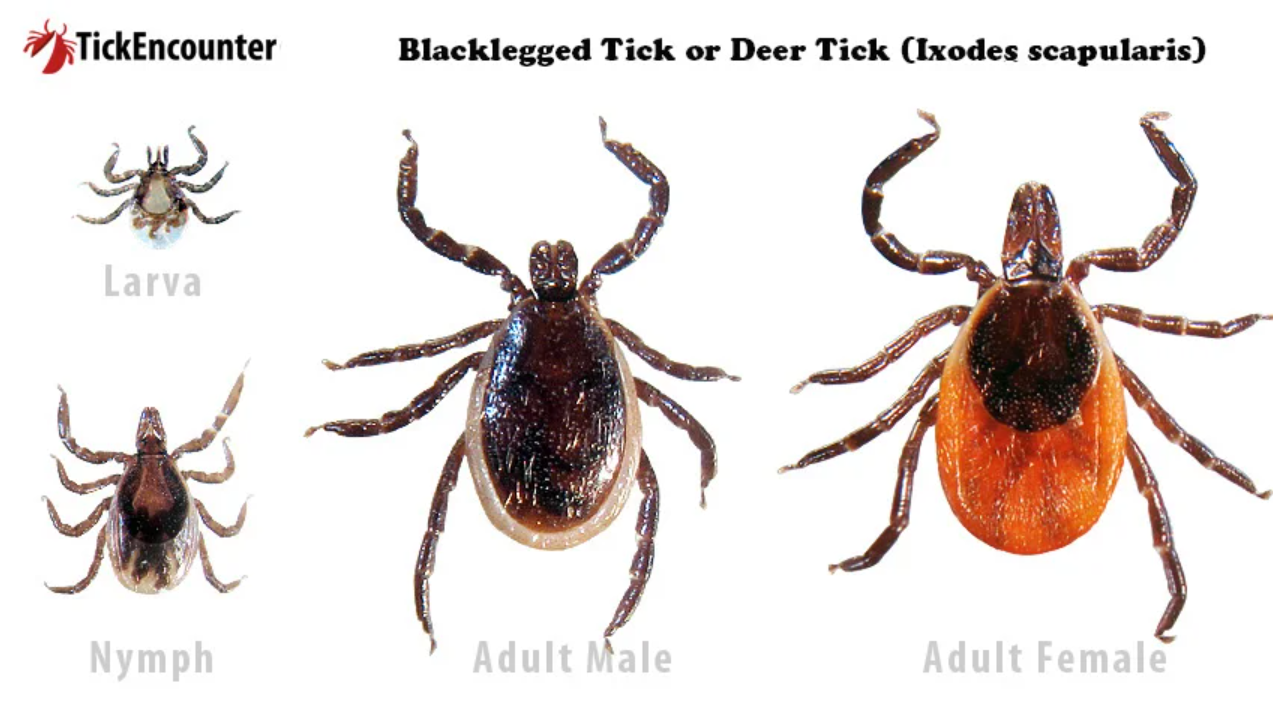
Deer tick (or blacklegged tick) – the problem tick
They’re small and can be found year-round. They are also the biggest drivers of infectious disease including Lyme disease, babesiosis, anaplasmosis, hard tick relapsing fever (borrelia miyamotoi), and Powassan virus.
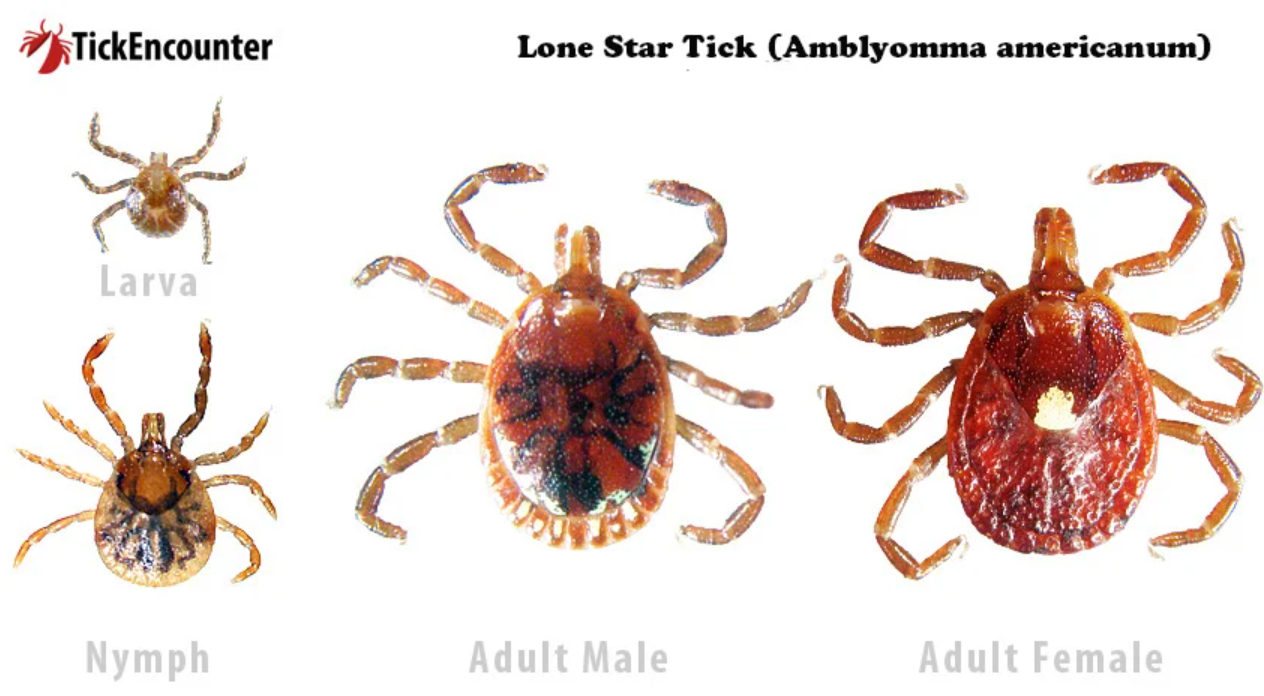
Lone Star tick – the new kid on the block
Lone Star ticks are named after the white dot found on adult female ticks. They were commonly found in the Southeast US and are now making their way up the Atlantic coast. In our region, Lone Star ticks first proliferated on Martha’s Vineyard but are becoming increasingly common on Cape Cod.
These ticks are active from spring to fall. The larvae (babies) are out in later summer and fall and can cluster together and cause numerous bites at once. They are known for causing Alpha Gal Syndrome (the red meat allergy), ehrlichiosis, tularemia, and STARI.
The Disease is Specific to the Tick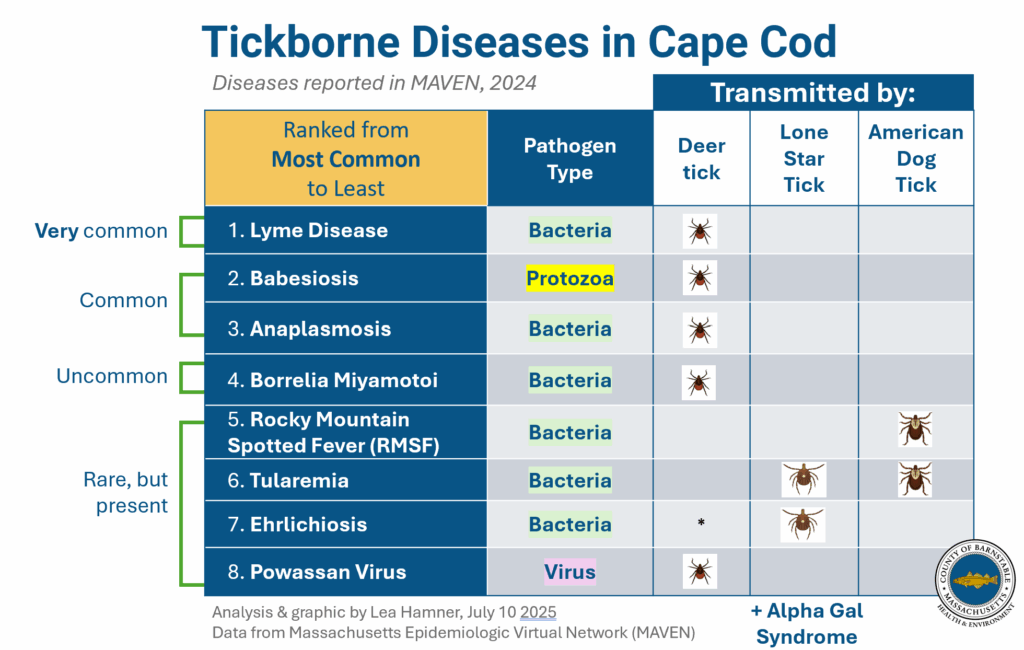
*Ehrlichiosis can be caused by a couple different strains of ehrlichia bacteria. In Cape Cod, we see ehrlichia chafeensis which is transmitted by Lone Star tick. In the Mid-West (Wisconsin, Minnesota), they have a deer tick-transmitted strain called ehrlichia muris eauclairensis.
All tickborne disease is local. Meaning the risk of a tickborne disease entirely depends on where you have been. If you are travelling outside of Cape Cod, you can look up the risk in the area you are travelling to on the CDC’s Geographic Distribution of Tickborne Disease Cases.
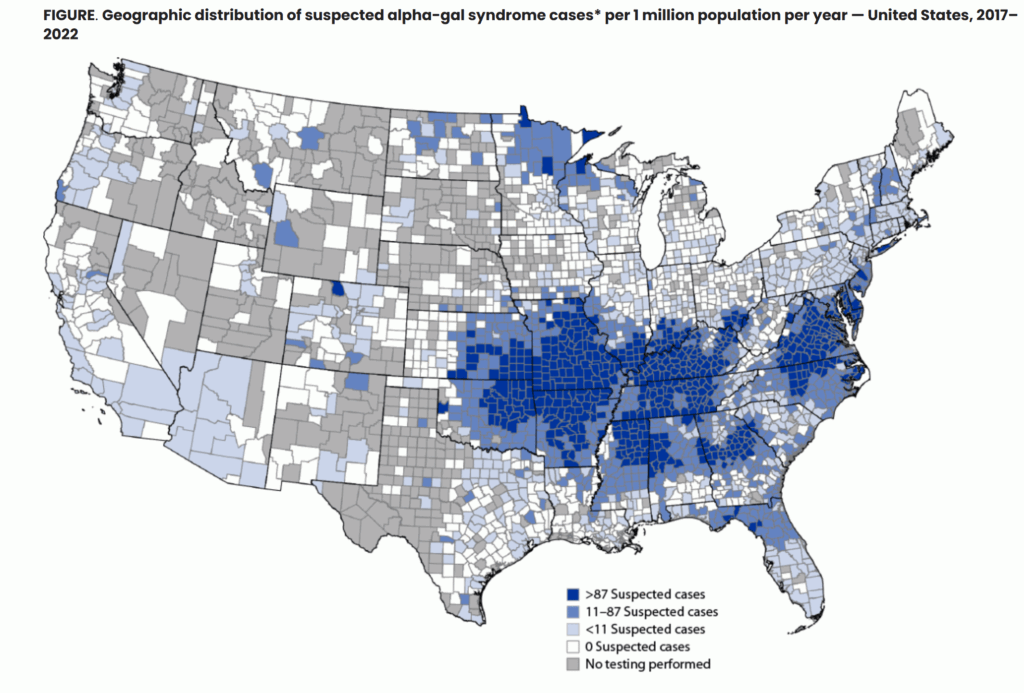
Alpha Gal Syndrome (sometimes called the red meat allergy) is not a reportable condition in Massachusetts, so it is tough to figure out exactly where it lands in the pecking order. But we do know that it’s on the rise following the spread of Lone Star ticks. Martha’s Vineyard has experienced an epidemic of Alpha Gal Syndrome after an explosion in the tick population. Lone Star ticks have been found on Cape Cod since 2011 and researchers and the public are finding them in more and more areas of Cape.
Read the story on the discovery and expansion of this emerging concern, including to Martha’s Vineyard, in The Scientist Magazine’s The Alpha-Gal Syndrome Story: How Researchers Traced a Red-Meat Allergy to Ticks.
You Found a Tick! Now What?
Even with the great options below, it’s important to stay vigilant for symptoms even if your tick isn’t a disease-carrier or your tick tests negative. Sometimes it’s the tick you don’t find that causes you to get sick. Practicing daily tick checks helps reduce your risk.
Remove
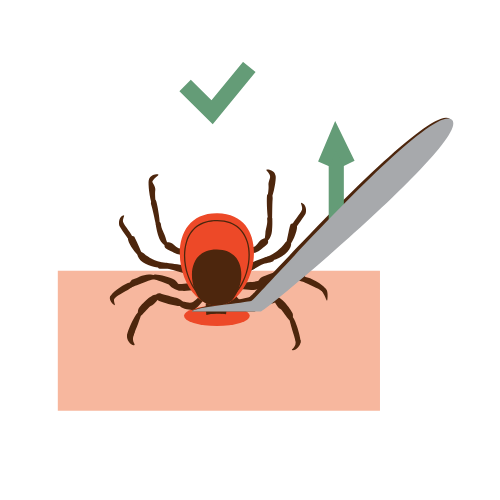
It’s important to get ticks off you as soon as possible. If they bite and are attached, use tweezers, grasp the tick as close as you can to the skin, and pull straight up.
Have a Tick Kit in your bag or car to be ready:
- Tweezers, to remove ticks. Fine point tweezers are ideal, normal tweezers work too.
- Tape, to secure the tick and save for the next steps.
- Alcohol wipes, to disinfect the bite site after removal
- Sticky lint roller, to quickly remove unattached ticks. Use after being outside to remove sneaky hitchhikers.
Need help? The Tick Bite Bot is an interactive tool from the Centers for Disease Control and Prevention (CDC) that assists individuals on removing attached ticks and determining when to seek health care, if appropriate, after a tick bite. This online mobile-friendly tool asks a series of questions covering topics such as tick attachment time and symptoms. Based on the user’s responses, the tool then provides information about recommended actions and resources.
Identify

To know the tick is to know the risk. Different ticks have different diseases. Identifying ticks can be difficult, but if you are interested in learning how to do it University of Rhode Island’s TickEncounter is here to help! They have pictures and ID tools on their website. They even have a service to identify the tick for you, for FREE! Submit a photo of your tick to their service TickSpotters and they will tell you what it might be and the risk of it carrying a disease. Check out their website to learn how to take a good photo of a tiny tick.
Test
 Several companies offer tick testing. Previous discounted tick testing through Barnstable County is no longer available, as the funding has been fully expended. TickReport continues to offer tick testing services. Current testing options, pricing, and instructions are available at www.TickReport.com Knowing what pathogens the tick carried could help your medical care if you develop symptoms. Not every tick bite is guaranteed to cause human disease, but knowledge can be power!
Contribute to Research

Concerned about the risk of tick bites in your parks and neighborhood? There’s an app for that!
Using a smartphone app, researchers from Columbia University, University of Illinois Urbana-Champaign, Michigan State University, and the University of Wisconsin – Madison are trying to determine where and how often people become exposed to ticks across the United States. The Tick App is funded by the Centers for Disease Control.
The main goal of this project is to study human behavior, tick exposure and the risk of Lyme Disease using a citizen science approach via a smartphone application, The Tick App. The Tick App uses a combination of surveys and geolocation technology to uncover how people’s day-to-day activities play a role in their risk for tick-borne diseases. This information can help to develop disease control programs that allow people to enjoy their outdoor activities safely while reducing disease risk.
Tickborne Diseases on Cape Cod
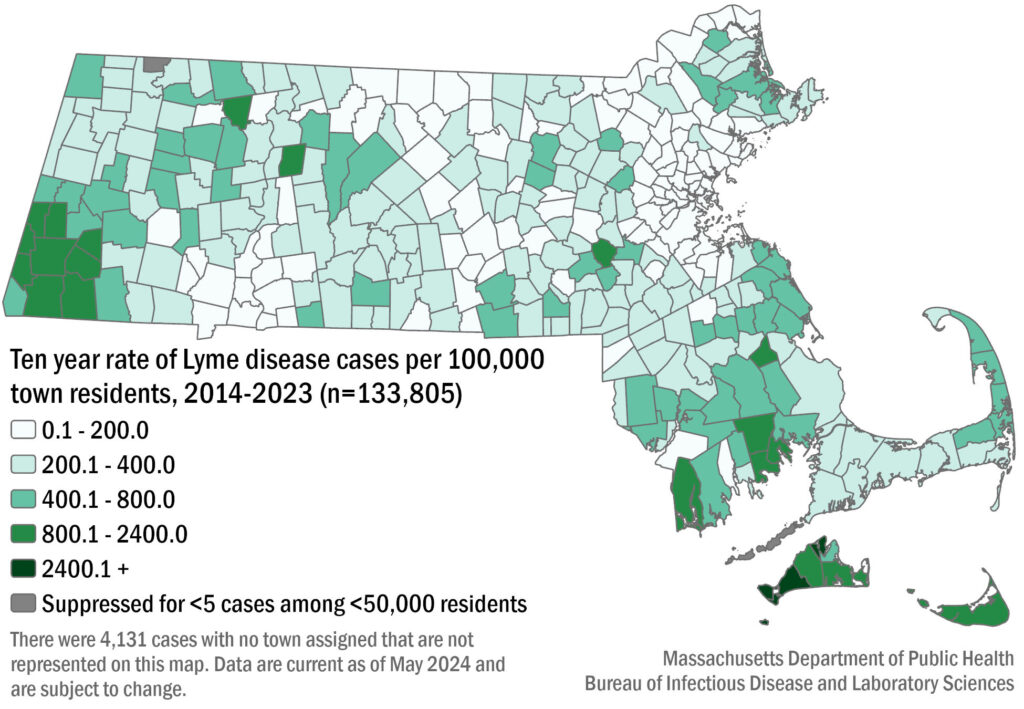
Before you say, “Hey, Cape Cod is a lighter green. That’s good isn’t it?” take a look at the scale in the bottom left. Those numbers are extremely high rates. Overall, Massachusetts has the 3rd highest rate of Lyme Disease in the country, behind Connecticut and New York.
- Lyme disease is caused by bacteria, Borrelia burgdorferi, which is spread by the bite of an infected deer tick. In most cases, a deer tick must be attached for more than 24 hours to transmit the bacteria to a human.
- Lyme is very common on Cape Cod & the Islands: Lyme disease is the most common tickborne disease in the area, with about 38% of adult and 22% of nymph (teenage) deer ticks carrying the bacteria.
- Most new infections show symptoms in May-August: This coincides with when the nymph (teenage) ticks are active. It is also when we are most active, spending more time outdoors unprotected.
- Still, the risk of Lyme Disease is year-round: Adult deer ticks are active fall through winter, as long as it’s above 40 degrees.
- Early symptoms of Lyme disease include fever, fatigue, headache, achy joints and muscles, and an Erythma Migrans (EM) rash. The rash isn’t itchy or painful but can expand over time. It can look like a bullseye—a circular red rash that clears in the middle and slowly expands. It can also take alternate forms (CDC, page 12.) 20-30% of patients don’t get the rash. These symptoms usually present 3 to 30 days after a tick bite.
- Treatable with antibiotics: If you think you have Lyme Disease, talk to your doctor about your symptoms and get tested. Lyme testing is challenging (still) and people can test negative early on in their illness while their immune system is revving up a response. Your doctor might prescribe antibiotics based on your symptoms alone, test results, or suggest follow-up testing.
- Delayed treatment or untreated Lyme can cause worse symptoms: The wide range of symptoms can include neck stiffness, facial paralysis, irregular heartbeat, arthritis, nerve pain, and swelling of the joints.
- Although the most common tickborne disease, much about Lyme disease is still being researched. While research is still ongoing, we do know that prevention, tick identification, and early treatment are the best ways to protect yourself!
- In the Cape & Islands, it’s important to practice tick bite prevention year-round. Prevent tick bites with permethrin-treated clothing, repellents, or tucking clothes in to keep ticks off your skin. Check yourself daily for ticks and remove them immediately with tweezers.
For patients and the public:
- Lyme Wellness Initiative
- Lyme Disease | Mass.gov
- Lyme Disease in Dogs: Symptoms, Testing, Treatment, and Prevention
- Lyme disease | American Veterinary Medical Association
For Clinicians:
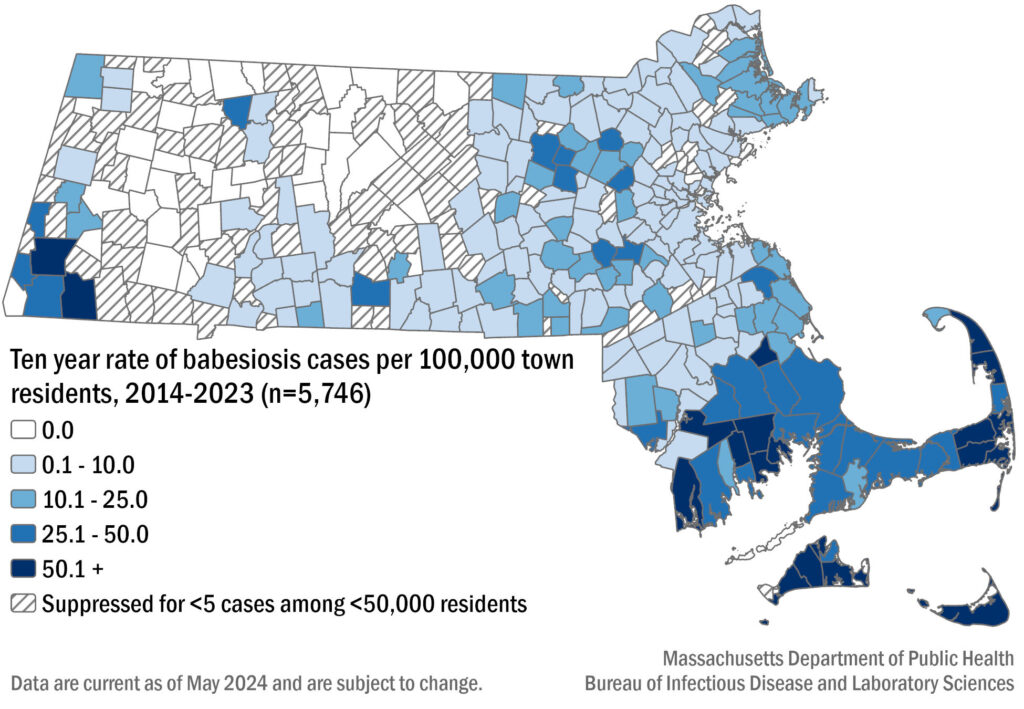
- Babesiosis is caused by a malaria-like parasite that infects red blood cells. The parasite is spread through the bite of an infected deer tick. Some call it “Massachusetts Malaria.”
- Second most common tickborne illness on Cape Cod & the Islands: While Lyme disease is the most common, babesiosis is the second biggest threat from deer ticks in the region. It was once called “Nantucket Fever” because the first identified cases occurred on Nantucket in the 1970s.
- Most new infections show symptoms in May–August: This aligns with the active season for nymph (teenage) ticks—small and hard to detect. It’s also when people are most likely to be outside and unprotected.
- Still, the risk of babesiosis is year-round: Adult deer ticks, which carry the highest risk of transmitting babesiosis, are active from fall through winter whenever temperatures are above 40°F.
- Many people don’t have symptoms; those who do might think it’s the flu: About 50% of children and 25% of adults infected with babesiosis show no symptoms. When symptoms do occur, they often include fever, chills, body aches, and fatigue. A “summer flu” on Cape Cod or the Islands could be a tickborne illness.
- Severe illness is possible, especially in people over 50, without a spleen, or with weakened immune systems. In rare cases, babesiosis can be life-threatening. If you develop symptoms, it’s important to talk to a doctor right away.
- Treatable with antiparasitic and antibiotic medications: If you think you may have babesiosis, contact your healthcare provider. Blood testing can confirm infection, and early treatment improves outcomes.
- In the Cape & Islands, it’s important to practice tick bite prevention year-round. Prevent tick bites with permethrin-treated clothing, EPA-registered repellents, and by tucking pants into socks or shirts into pants. Perform daily tick checks and remove any ticks immediately with tweezers.
For patients and the public:
For Clinicians:
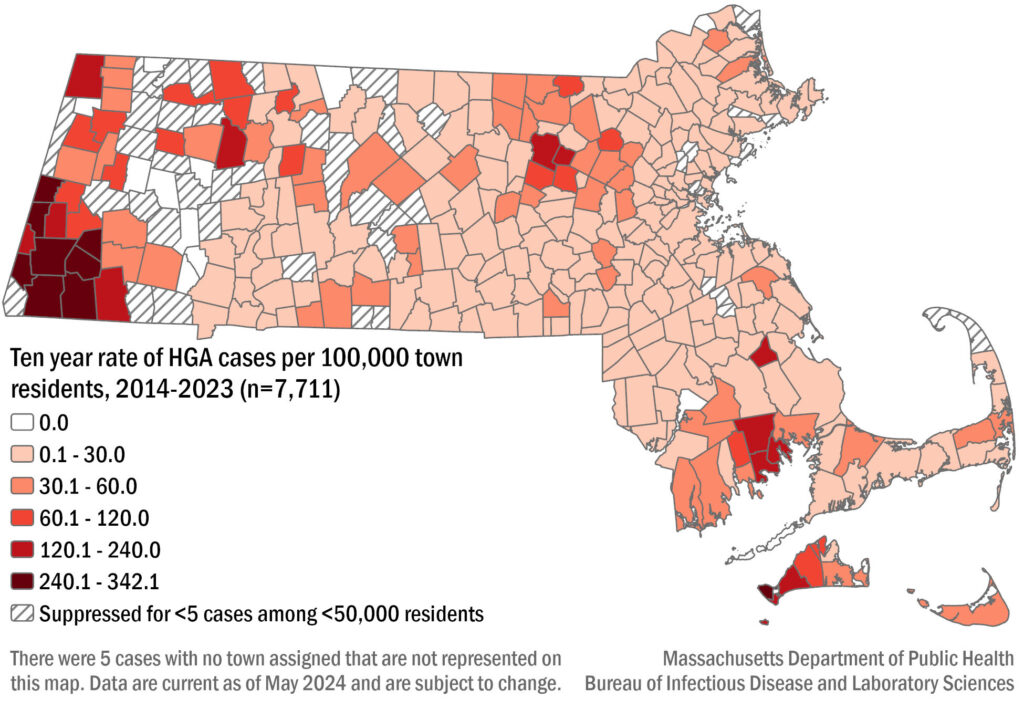
- Anaplasmosis is caused by bacteria (Anaplasma phagocytophilum) that are spread by the bite of an infected deer tick. These bacteria attack granulocytes, a type of white blood cell important for fighting infection.
- Anaplasmosis is the third most common tickborne disease on Cape Cod and the Islands, following Lyme disease and babesiosis.
- Most new infections show symptoms in May–August: This coincides with the active season for nymph (teenage) ticks, which are small and easy to miss. It’s also when people spend more time outdoors, increasing the risk of tick exposure.
- Still, the risk of anaplasmosis is year-round: Adult deer ticks—which also carry the bacteria—are active from fall through winter, whenever temperatures are above 40°F.
- Early symptoms can include flu-like illness: Fever, chills, severe headache, muscle aches, and gastrointestinal symptoms such as nausea, vomiting, diarrhea, and loss of appetite. These typically develop 5–14 days after a tick bite.
- Severe illness can occur: While many people recover quickly with treatment, some may experience respiratory failure, bleeding problems, organ failure, or even death. Severe cases are more common in people over age 65, those with weakened immune systems, or those with multiple tickborne infections (from either multiple bites or a single co-infected tick). Delayed diagnosis and treatment also increase the risk of complications.
- Anaplasmosis is treatable with antibiotics: If you think you have anaplasmosis, contact your healthcare provider. They may start treatment based on your symptoms, test results, or recommend follow-up testing.
- In the Cape & Islands, it’s important to practice tick bite prevention year-round. Prevent tick bites with permethrin-treated clothing, EPA-registered repellents, and by tucking pants into socks or shirts into pants. Perform daily tick checks and remove any ticks immediately with tweezers.
For patients and the public:
For Clinicians:
- FREE CDC Continuing Education Credits: “Diagnosis and Treatment of Ehrlichiosis and Anaplasmosis“
- Tickborne Diseases of the United States: A Reference Manual for Healthcare Providers
- Clinical Signs and Symptoms of Anaplasmosis | Anaplasmosis | CDC
- Diagnosis and Management of Tickborne Rickettsial Diseases: Rocky Mountain Spotted Fever and Other Spotted Fever Group Rickettsioses, Ehrlichioses, and Anaplasmosis — United States: A Practical Guide for Health Care and Public Health Professionals (2016)
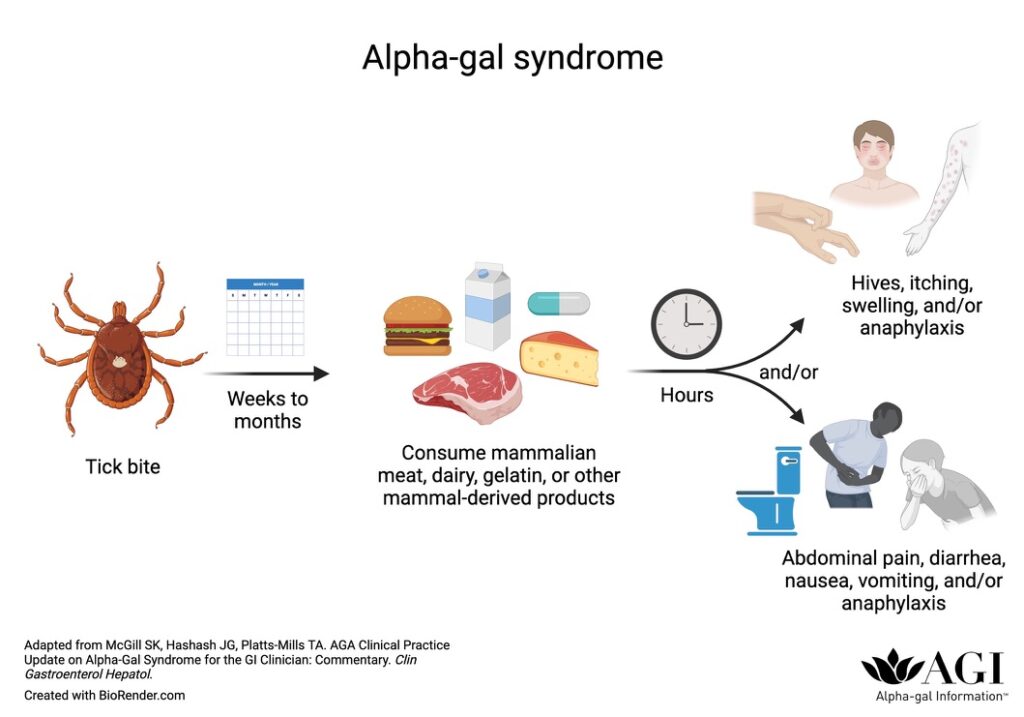
- Here’s a weird one: Alpha‑Gal Syndrome (AGS) is a tick‑induced red‑meat allergy. When Lone Star tick bite, their saliva introduces a sugar molecule that our immune system can decide is a foreign invader and create an allergic response. The sugar molecule, galactose‑α‑1,3‑galactose (alpha‑gal), is found in most mammals and any products made from them, including red meat and dairy but also medications, beauty products, and clothing (leather, wool, etc). Patients have different levels of sensitivity, but to be diagnosed with the allergy a patient must at least react to red meat.
- It’s an emerging concern on Cape Cod & the Islands: Lone Star ticks are being found in more areas in the Cape & Islands. On Martha’s Vineyard, their populations have exploded and the number of patients suffering from Alpha Gal Syndrome has followed suit. Doctors and patients are starting to report more cases on Cape Cod and Nantcuket, and the problem is expected to grow with the Lone Star population.
- Allergy symptoms don’t usually happen immediately, often appearing hours after eating red meat or mammal‑derived products. Unlike typical food allergies, AGS reactions are delayed—usually 2–8 hours after consuming beef, pork, lamb, or even dairy, gelatin capsules, and certain medications. Sometimes nicknamed the “Midnight Allergy”, people often eat their biggest portion of mammalian food at dinner (a burger, a steak, a pork chop, ice cream), and then wake up in the night or in the morning with symptoms of an allergic response.
- Signs range from mild to life‑threatening: Common symptoms include hives or itchy rash, swelling of lips or throat, shortness of breath, dizziness, or fainting. Some patients only experience gastrointestinal symptoms of stomach pain, nausea, and diarrhea. Some patients experience different types of reactions, exposure to exposure. Anaphylaxis is possible and is a medical emergency. Call 911 or go to the emergency department if you believe you’re having anaphylaxis.
- AGS is unpredictable and often hard to diagnose: Reactions can wax and wane, mimic IBS or arthritis, and delay in onset makes it easy to overlook. Many healthcare providers lack familiarity, contributing to diagnostic delays.
- AGS can develop weeks to months after a Lone Star tick bite. After a tick bite, symptoms may not show up until weeks later when consuming alpha‑gal, meaning the connection to a tick bite can be overlooked .
- Diagnosis is through reviewing your symptoms, then performing a blood test. Blood tests detect IgE antibodies to alpha‑gal. A thorough history—especially of tick bites and delayed meat reactions—helps guide testing. People with no symptoms do not need to get tested. Our immune system can recognize Alpha Gal but not create an allergic response. Symptoms first, testing second.
- There’s no treatment yet—avoidance is key: While treatments are being investigated, the main intervention is avoiding red meat and other mammal‑derived products. This should be done in consultation with an allergist and a dietician. Depending on severity, patients may use antihistamines or carry an EpiPen for emergencies.
- For some, Alpha Gal Syndrome can go away in months to years as long as they avoid more tick bites. In this case, prevention is the cure. Avoiding more tick bites can allow your immune system to taper off its allergic reaction. Talk to your allergist before reintroducing any foods you were previously allergic to. Not everyone is able to “recover” from AGS, even after avoiding tick bites.
- Prevention is critical—avoid tick bites year‑round. Use permethrin‑treated clothing, EPA‑registered repellents, tuck your clothes tight, check for ticks daily, and remove any promptly with tweezers .
For patients and the public:
- AlphaGalInfromation.org
- About Alpha-gal Syndrome | Alpha-gal Syndrome | CDC
- Video Series on Alpha Gal Syndrome from Martha’s Vineyard
For Clinicians:
- FREE CDC Continuing Education Credits: “Understanding and Managing Alpha-Gal Syndrome for Healthcare Providers“
- Alpha-gal Information: Providers
- Clinical Diagnosis and Testing | Alpha-gal Syndrome | CDC
Prevent the Bite
First things first, we want you to not get bit at all! One could say, “Nothing good ever came from a tick bite.” At best, tick bites are itchy. At worst, they can infect you with diseases or cause you to become allergic to red meat (Alpha-Gal Syndrome). Tick bite prevention requires us to take proactive steps for our health. The best tick protection is when we do multiple types of prevention.
The 3 types of ticks on Cape Cod prefer different habitats. So, it’s easier to tell you where you don’t find ticks: on dirt, gravel or asphalt. Many people get ticks in their own yard or neighborhood. Activities like gardening and mowing can lead to tick bites if you go about them unprotected. Other activities likely to result in a tick encounter include walking your dog, hiking, camping, or hunting. Owning pets like dogs and cats can lead to tick exposure when they come inside and cuddle with their owners. It is important to tick check your animals just as you tick check yourself.
Because there is a lot of tick habitat on Cape Cod, we strongly recommend personal protection measures listed below; that way your tick bite prevention is with you wherever you go.
A clothing barrier between you and ticks means that ticks can’t get to your skin to bite. Long socks, pants, and long sleeves can help, but make sure they’re tucked into one another so a tick can’t sneak under. Leggings or pants with tight cuffs on the bottom are ideal tick protection fashion because a tick will not crawl underneath them.
Light colored clothing helps you spot the tick as it’s crawling so you can remove it. If you’d rather not have to pay close attention to ticks crawling on your clothing, read more about permethrin-treated clothing below.
Some people wear gardening arm protectors which can be breathable and lightweight while also protect against scratches, punctures, and ticks. You can also wear gaiters, a piece of clothing that covers your lower legs and ankles to prevent ticks from crawling under clothing.
Make your clothing barrier even more protective by treating it with permethrin. More info below!
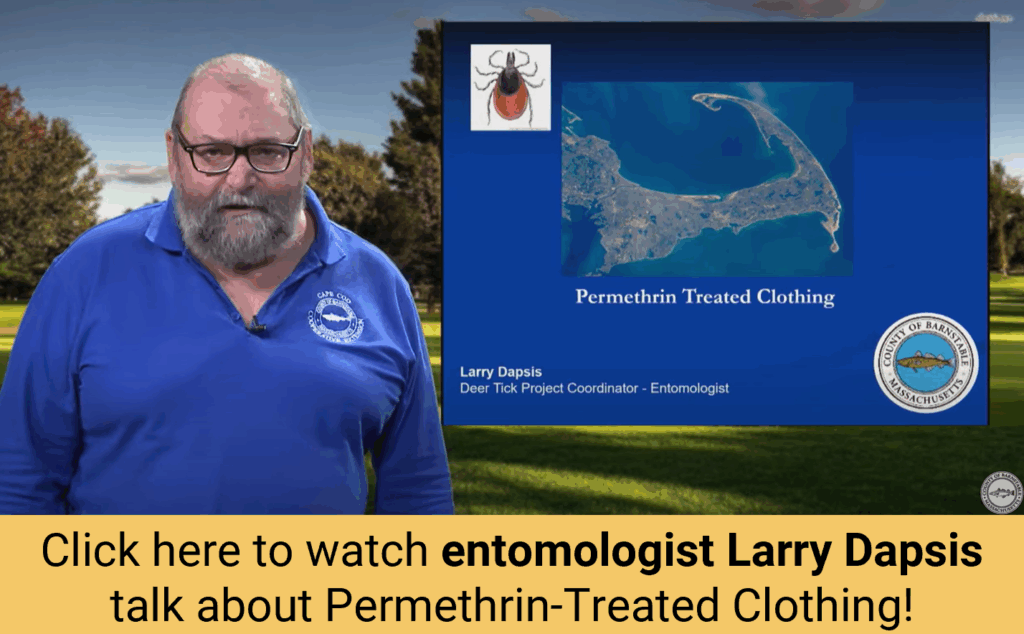
Did you know you can treat your clothing to be tick-resistant? Permethrin is an acaricide, meaning it kills ticks after a few minutes of exposure. It has been proven to be safe for humans to wear on their clothing and the EPA puts no restrictions on age for using it. Any outer clothing can be treated with permethrin–such as shoes, socks, pants, and shirts. There are also “tick gaiters”–a piece of clothing that wraps around the lower leg or arms.
Our biologist staff and colleagues who collect ticks for a living will tell you that permethrin treated clothing is their go-to tool to prevent bites.
Did you know that Permethrin was discovered from a flower? Permethrin is an insecticide made from synthetic chemicals that act like the natural extracts from the chrysanthemum flower. Permethrin has been manufactured in a lab setting, rather than growing huge chrysanthemum fields, to be able to make the chemical more affordable, stable, and reliable.
A couple key facts about permethrin:
- Permethrin is for clothes, blankets, tents, gear, and inanimate objects. Once dry, permethrin is very poorly absorbed through human skin so it can be worn on clothing safely. Follow label directions when using.
- Permethrin kills ticks after a few minutes of exposure. Since ticks are found in the first 3 feet from the ground, we recommend treating shoes, socks, and pants.
- If you purchase permethrin and apply it to your own clothing, one application typically stays effective through several washings. The manufacturer’s label will provide specific instructions, but many are protective for 6 weeks or 6 washings (whichever elapses sooner.)
- You can get longer term permethrin treatment if you buy pre-treated clothing. Some company’s products last up to 70 washings, which could be the lifetime of the garment! You can also send in your own clothing to be permethrin treated (only offered by Insect Shield).
Permethrin safety has been well studied, including looking at whether there are long-term effects from consistent use. Permethrin-treated clothing has been determined to be safe to use by anyone at any age. Read more on the EPA’s website.
When it’s hot out and you want to wear shorts, use Environmental Protection Agency (EPA)-registered insect repellents containing DEET, picaridin, IR3535, Oil of Lemon Eucalyptus (OLE), para-menthane-diol (PMD), or 2-undecanone. EPA registration means that the product has been tested for both safety and efficacy.
EPA has a “Find the Repellent that is Right for Me” tool to help you find the product that best suits your needs.
Always follow product instructions. Do not use products containing OLE or PMD on children under 3 years old. When used as directed, EPA-registered insect repellents are proven safe and effective, even for pregnant and breastfeeding women.
Note that if you are using sunscreen, apply sunscreen first and insect repellent second.
We know creating new habits are hard. But catching ticks as soon as possible is critical to preventing a nasty tick infection, or a new allergy. Showering, and checking for ticks, within two hours of coming indoors has been shown to reduce the risk of Lyme Disease.
Using a handheld or full-length mirror, check your full body for ticks daily in the shower or when you change into pajamas. Once you get the hang of it, a thorough tick check only takes 30 seconds.
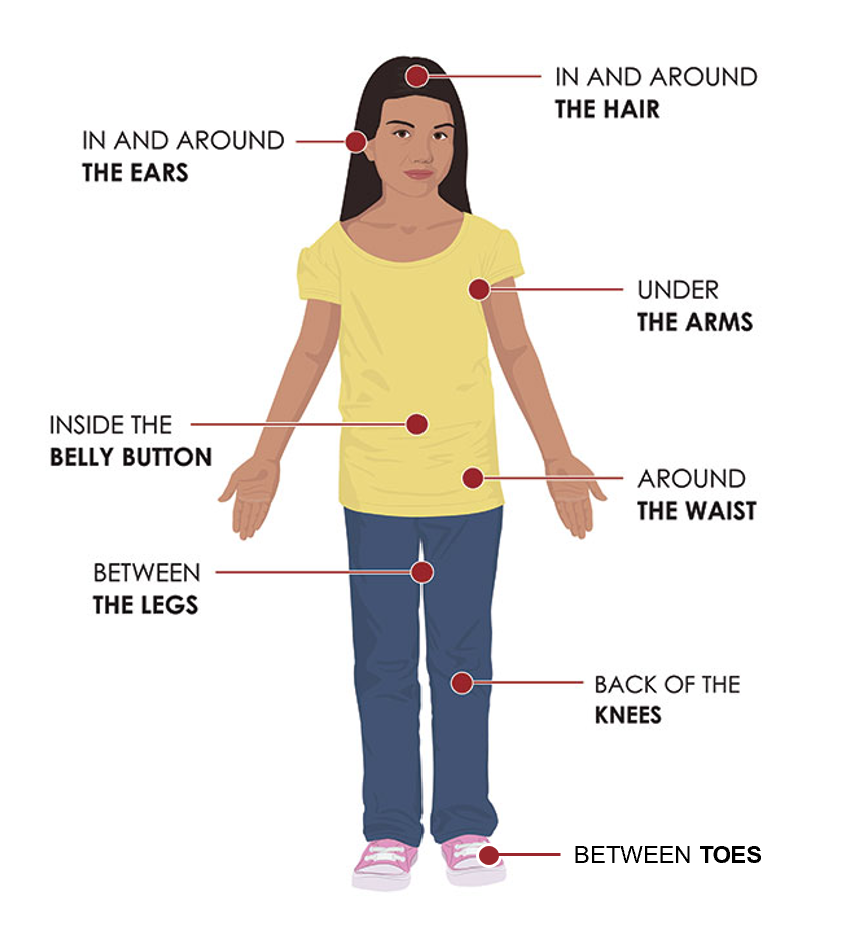
Ticks may be carried into the house on clothing. Any ticks that are found should be removed. Tumble dry clothes in a dryer on high heat for 10 minutes to kill ticks on dry clothing after you come indoors. Dry heat kills ticks. If the clothes are damp, additional time may be needed. If the clothes require washing first, hot water is recommended. Cold and medium temperature water will not kill ticks.
Insect Shield®: Permethrin Treated Apparel to Protect You and Your Family from Ticks
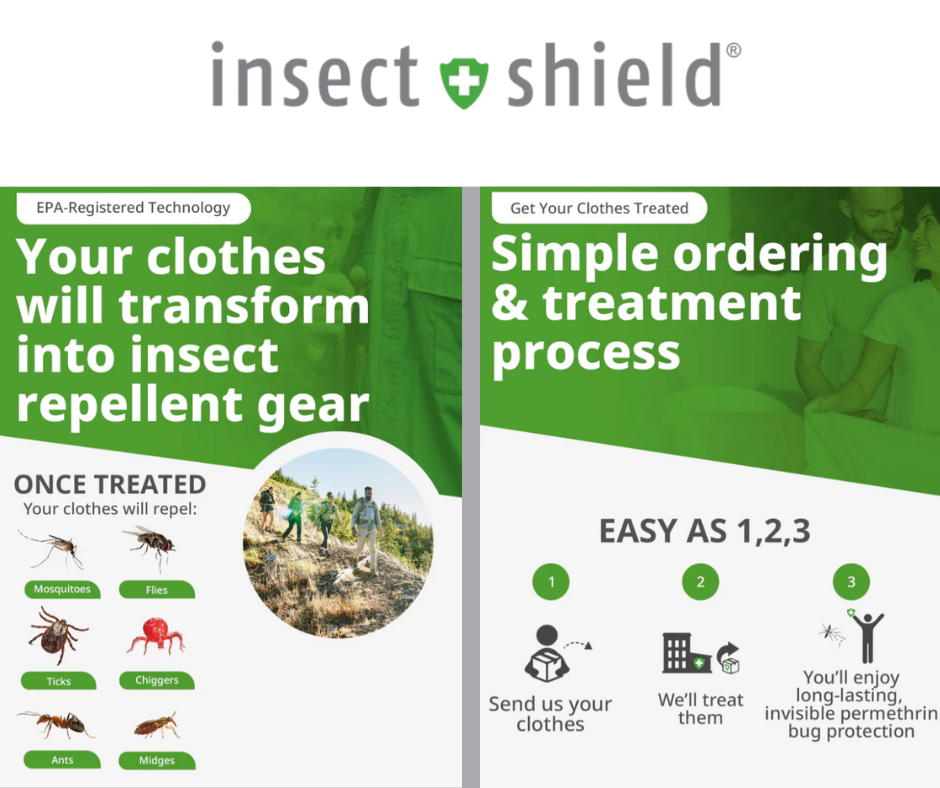
Insect Shield® permethrin treated clothing offers built-in bug protection. It’s EPA-registered and approved for use by the whole family, without restrictions. Get long-lasting protection from mosquitoes, ticks, and other insects that can carry dangerous diseases.
The best thing about Insect Shield®? You can have your own favorite clothing treated with permethrin! Like all Insect Shield apparel, the repellency added to your clothes is invisible and lasts through approximately 70 washings.
Use discount code: CAPECOD2025
Disclaimer: Mention of specific brands, products, or services—such as Insect Shield’s® clothing treatment—is provided for informational purposes only to illustrate available options for personal protection. Barnstable County does not endorse or receive compensation from any commercial entity and encourages individuals to explore multiple resources when considering insect repellent products.
Helpful Links & Resources
Personal Protection:
- Preventing Tick Bites >>>
- Tick Fact Sheet >>>
- Find the Repellent that is Right For You >>>
- Find the Repellent that is Right for You | US EPA
- Preventing Tickborne Diseases Portuguese >>>
- Don’t Let One Bite Change Your Life >>>
- What to Do If You Find a Tick on You OR You Have Any of the Following Symptoms >>>
Pet Protection:
- Lyme disease | American Veterinary Medical Association
- Dog and Cat Tick Statistics >>>
- Quick Reference Guide on Parasite Products (Discuss with your Vet!) >>>
Yard Protection:

Check out the Martha’s Vineyard video series on ticks, tick ecology, diseases, and Alpha Gal Syndrome!

Cape Wide Lyme Disease Support Groups
Anyone with an interest in Lyme is welcome!
LOWER CAPE
Cape Cod Covenant Church
11 Satucket Rd, Brewster, MA 02631
(Corner of Airline & Satucket Roads)
3rd Sunday every month 3:00pm – 4:30pm
Park and enter in rear
Transportation available if needed
All meetings are handicap/ wheelchair accessible and smoke free
Solicitation strictly prohibited
Contact: Lisa C Freeman RNC BSN FCN Lfree125@comcast.net
Cape Lyme Advocacy Support Program (CLASP)