


Mosquito-Borne Viruses
August 2026
Increasing Detections of West Nile Virus Expected in August
Advising Caution, Not Alarm
August is the time where we see increasing detections of West Nile Virus in Cape Cod mosquitoes, increasing the risk for human infections. Barnstable County and Cape Cod Mosquito Control district advise:
- Avoid mosquito bites and use EPA-registered repellents.
- Mosquitoes that can carry WNV are active at dusk and after dark so precautions should be taken to avoid mosquitoes at these times.
- The species that transmit this disease prefer to lay their eggs in man-made containers like tires, tarps, gutters, and children’s toys that hold water after a rain event. People can reduce the mosquito population in their area by checking their property for standing water and dumping it out.
The Department of Public Health dashboards below provide up-to-date information on West Nile Virus (WNV) and Eastern Equine Encephalitis (EEE) detections in mosquitoes, animals, and people.

Got Questions About Mosquitoes? Call the experts at the Cape Cod Mosquito Control Project!
Established in 1928, the Cape Cod Mosquito Control Project (CCMCP) conducts mosquito trapping. monitoring, and control in all of Cape Cod’s 15 towns. CCMCP works year-round to implement their Integrated Mosquito Management Plan, to reduce the mosquito population and prevent infectious diseases like West Nile Virus and Eastern Equine Encephalitis. You can visit their website or call them at (508) 775-1510.
Massachusetts Arbovirus Surveillance Dashboard
Find local risk levels for Eastern Equine Encephalitis (EEE) and West Nile Virus (WNV) based on seasonal testing.
Click on a town to see what prevention measures are recommended locally based on mosquito, animal, and human testing. You can also use the drop down list on the right side of the maps to find a county or town.
Mosquito-Borne Viruses & Prevention
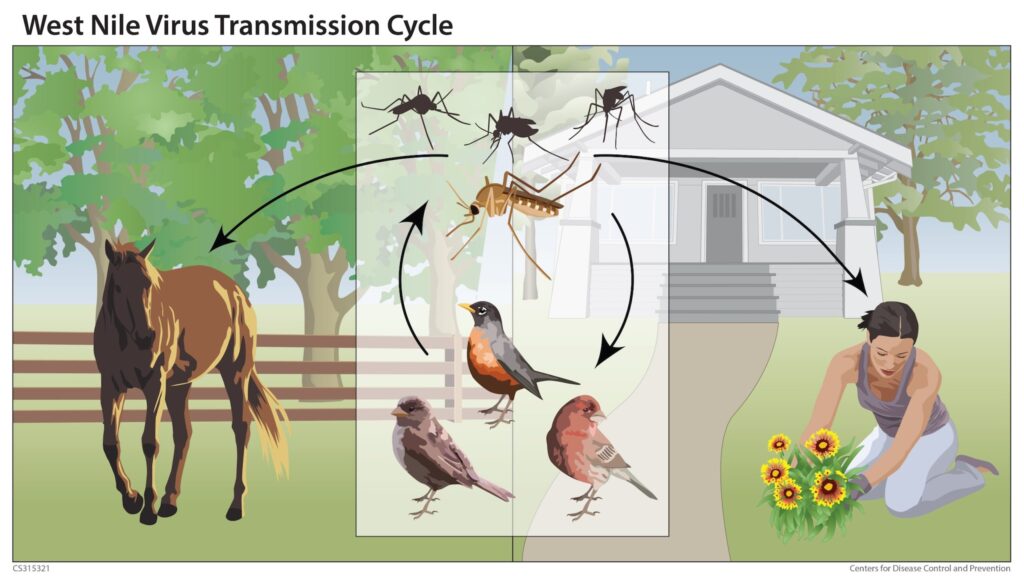
Barnstable County Department of Health and Environment–along with state and town health departments–monitors for cases of West Nile Virus (more common) and Eastern Equine Encephalitis (less common). Both diseases are impacted by complex interactions between mosquitoes, birds, mammals, and humans and this can cause the variability in the number of cases year to year. When we do see locally acquired human cases, they usually appear beginning in summertime and extending through fall.
See the Arbovirus Dashboard above to look at the latest data for 2025 and click on your town to see what actions we recommend you take to protect yourself!
Last Year:
Previous seasons can help us anticipate what will happen this year. In 2024, there were cases of:
West Nile Virus (WNV), a more common viral illness that is often asymptomatic; 20% of individuals develop symptoms such as headaches, body aches, joint pains, vomiting, diarrhea, or rash.
There were 13 WNV human cases in 2024 including 1 in Barnstable County: a man in his 60s with symptoms beginning 8/24 that include encephalitis. People over 50 are more likely to experience severe outcomes such as encephalitis (inflammation of the brain) or meningitis (inflammation of the membranes that surround the brain and spinal cord).
Nearby, there was:
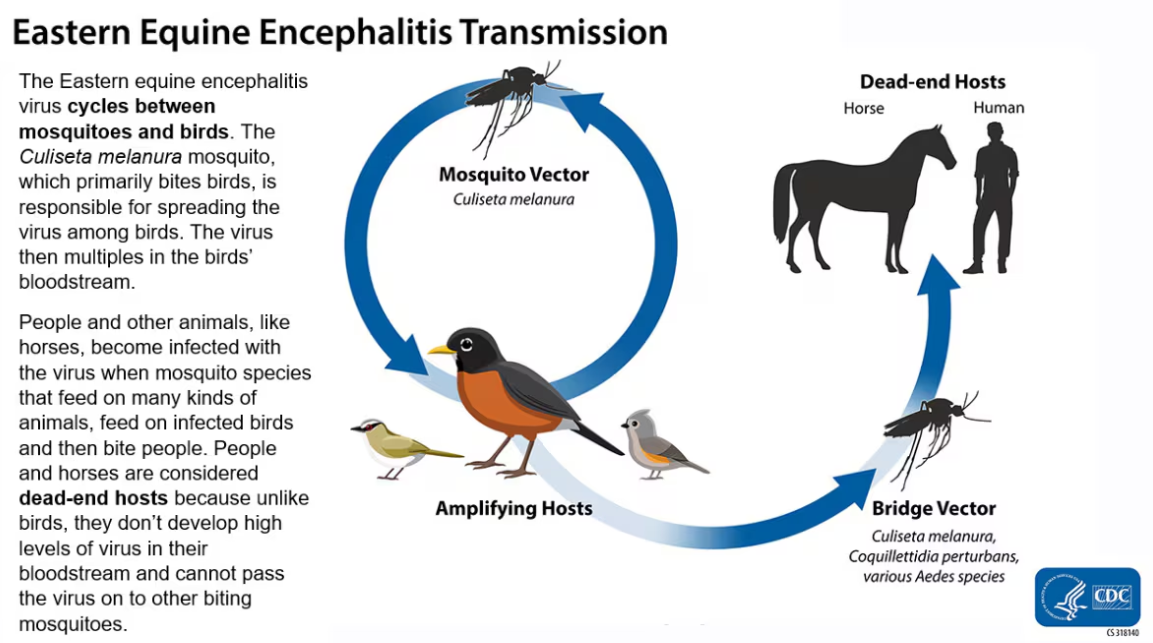
Eastern Equine Encephalitis (EEE), a rare but severe illness. The first symptoms of EEE are fever (often 103º to 106ºF), stiff neck, headache, and lack of energy. These symptoms show up three to ten days after a bite from an infected mosquito. Inflammation and swelling of the brain, called encephalitis, is the most dangerous and frequent serious complication. The disease gets worse quickly and some patients may go into a coma within a week.
In Massachusetts, there were four human cases of EEE in Worcester, Plymouth, and Middlesex Counties: a male in his 80s in Worcester County (onset of symptoms: August 6); a female in her 30s in Plymouth County (onset: August 17); a male in his 50s in Middlesex County (onset: August 12); a male in his 70s in Middlesex County (onset: August 22). None of the Massachusetts cases were fatal in 2024, but a man in New Hampshire died from the infection.
Eastern Equine Encephalitis Transmission Cycle
Preventing Mosquito Bites: Personal Protection is ESSENTIAL
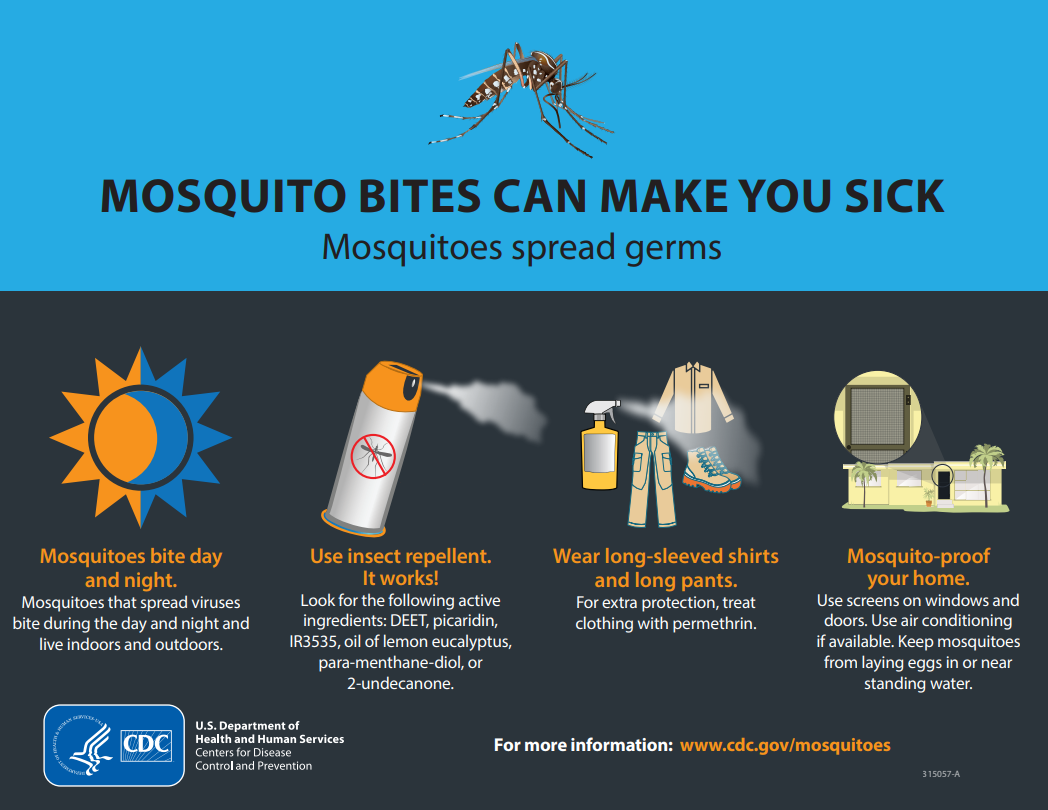
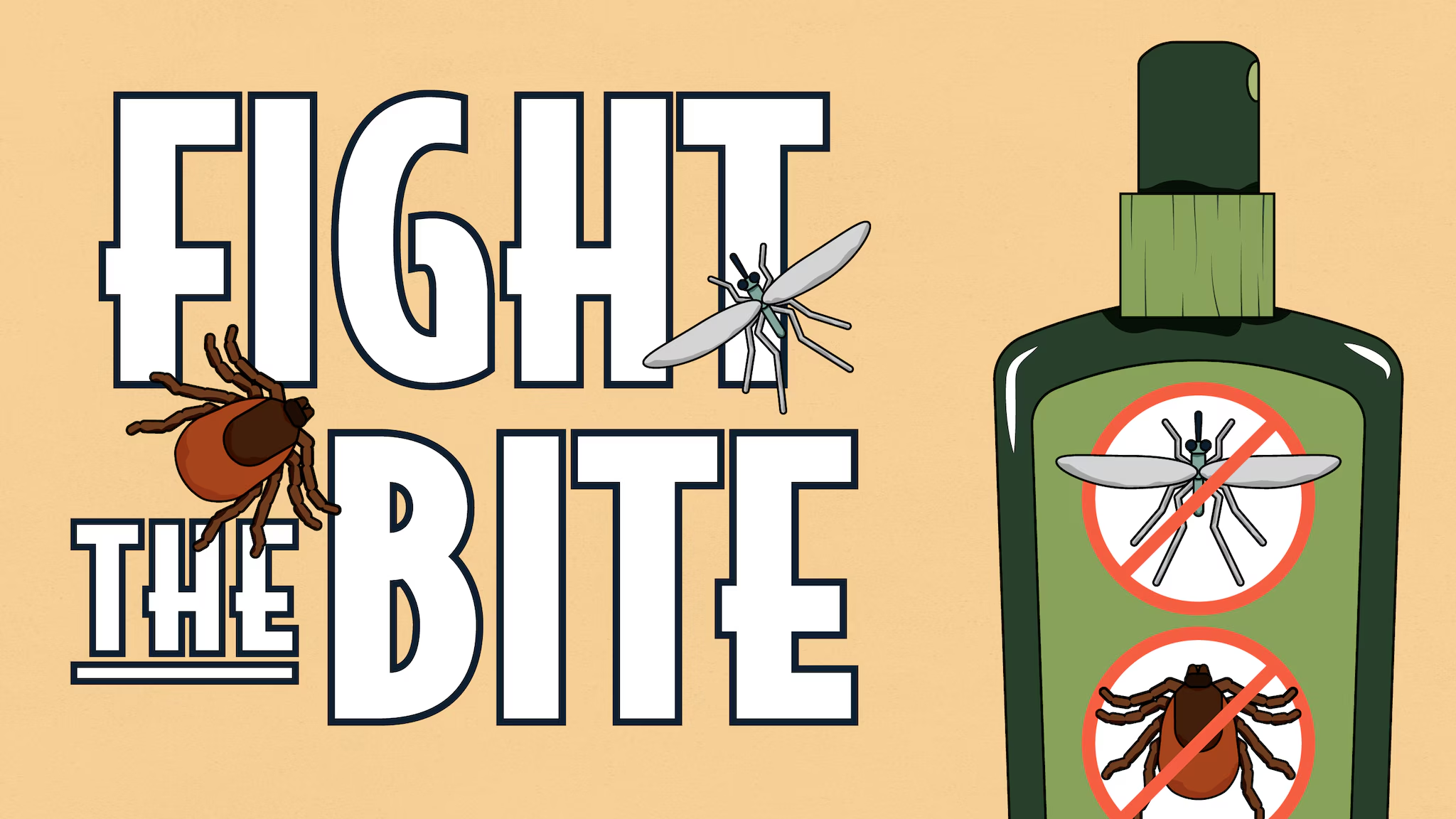
- Anytime you are outdoors, use EPA registered repellents! Being outside for even a short time can be long enough to get a mosquito bite. Use insect repellents with 20–30% DEET, 10–20% picardin, 10–20% IR3535, or 30–40% oil of lemon eucalyptus on skin and clothes to prevent bites. Make sure to follow directions on the label.
- Be vigilant! Be aware of mosquitoes around you. If mosquitoes are biting you, reapply repellent, or think about going inside.
- Wear long clothing! When outside wear long pants, sleeves, shoes, and socks. Apply permethrin to clothes and gear. It lasts through several washes after it is applied. Do not apply permethrin directly to skin.
- Use mosquito netting for babies! Use mosquito netting on baby carriages or playpens when your baby is outdoors.
- Reduce mosquito habitat around your home! Mosquitoes can breed in as little as ONE CUP of standing water. Check around your home and dump standing water twice weekly (or more depending on rain). For more information about protecting your home, see “Protect Your Home” below.
- TO BE MOST CAUTIOUS: Stay indoors! It’s best to remain indoors when mosquitoes are most active–which is dusk to dawn.
- TO BE MOST CAUTIOUS: Avoid camping overnight near freshwater swamps to reduce your risk of exposure to mosquitoes that carry the EEE virus. If you do go camping, use a tent with mosquito netting and use appropriate repellents.
If you are BITTEN
- Wash the bite with soap and water.
- Apply calamine lotion to help stop the itching.
- If you get sick after being bitten and suspect a mosquito-borne illness, CALL YOUR DOCTOR!
Protect your Home
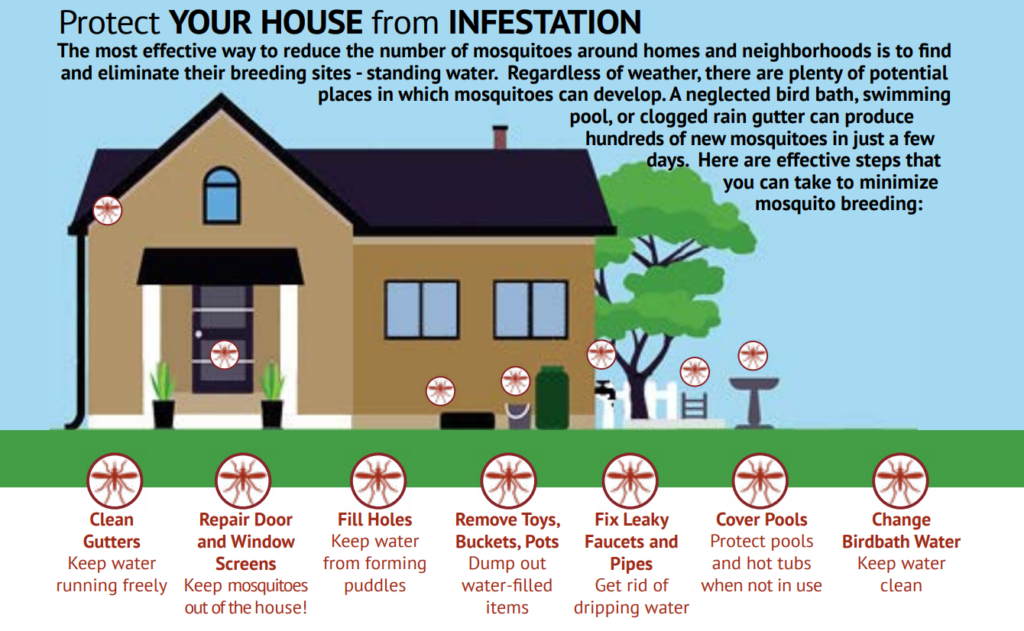
In a recent meeting, we asked CCMCP Entomologist Gabi Sakolsky what her #1 tip is for mosquito prevention and it is to empty or change standing water once per week! As spring rains continue, take the opportunity to walk around your home and look for mosquito habitats.
Many people immediately think of their bird baths. Do you change the bird bath water once per week? You should! Not only does it reduce mosquito habitat but it helps reduce risk of spreading disease between birds.
How about giving thought to some other key perpetrators that might not be top of mind? Common mosquito breeding areas include:
- Boats: Store small boats upside down or cover to keep out of the rain and water from sprinklers. Prevent accumulation of bilge water.
- Tarps: Small pools in tarps can be perfect breeding grounds. Drape tarps so there aren’t areas of accumulation or remove water after rain showers or using sprinklers.
- Wheelbarrows or other household items: Remove and dispose all unused containers that collect rain or water from sprinklers like cans, jars, buckets, tubs, old tires, barrels , etc..
- Concrete or plastic swimming pools: Operate filter and skimmer every day to remove egg rafts and larvae. Provide drainage filter and pump sumps. Chlorine will not kill mosquito larvae. If pool cover is used, keep it tightly sealed. Remove rainwater from top of pool cover.
- Trash and Recycling Bins: Cover outdoor trash and recycling cans with tight-fitting lids.
- Flower Pots: Drain dishes under flowerpots every few days and after rainstorms.
- Leaves: Clean up leaves and yard debris from low-lying areas to reduce stagnant water pools.
- Gutters: Gutters and downspouts need to be kept clean and maintained as leaves can create pools of water. Divots in gutters can also lead to stagnant water accumulation
- Tire Swing: Make a hole in the bottom of the swing to allow water to drain.
- Birdbaths: Replace water in birdbaths and fountains at least once a week.
- Ornamental ponds: Add goldfish for looks and mosquito control. Avoid spraying with garden insect sprays. Remove leaves and thin out lilies. Keep water level up. Screen inlet of recirculation pump. Chlorine kills fish—transfer fish to glass bowl when cleaning pond. If pond is no longer desired, break holes in bottom and fill with dirt or sand.
Cape Cod Mosquito Control Project offers consultations to the public on Cape Cod. If you have mosquito questions or a problem, feel free to call and ask the experts! Visit their website to learn more.