


Tick Season Is Here — and It’s Off to an Unusually Bad Start
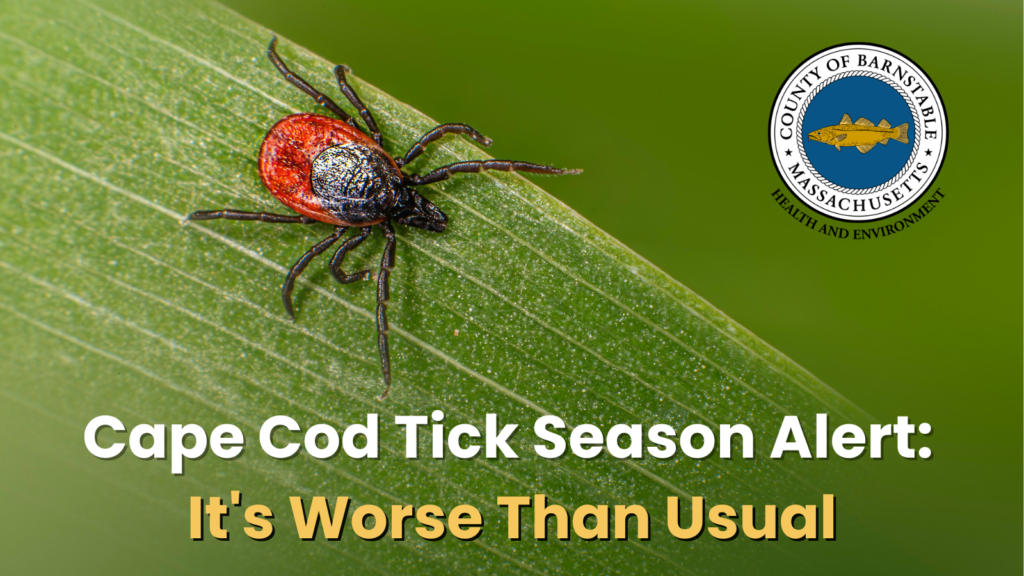
If it feels like ticks are worse than usual this year, the data backs you up. Emergency department visits for tick bites are currently running at roughly 114 per 100,000 people per week nationally — nearly triple the typical rate for this time of year (44 per 100,000). The Northeast is bearing the brunt of it. (Data from CDC)
For Cape Cod residents, that’s a meaningful heads-up. Our region is prime tick habitat — and it’s worth remembering that ticks can be active any time temperatures are above 40°F. April and May are actually some of the highest-risk months, because people aren’t thinking about prevention yet.
Ticks on Cape Cod
Three tick species are commonly found on the Cape, and each can transmit different illnesses:
Deer Tick (Black-legged Tick) — The most common concern. Can transmit Lyme disease, babesiosis, anaplasmosis, Powassan virus, and relapsing fever.
Lone Star Tick — Can spread ehrlichiosis, STARI, and tularemia. Its bite may also trigger alpha-gal syndrome (AGS), a red meat allergy. AGS recently became a reportable condition in Massachusetts.
Dog Tick — Can transmit tularemia and Rocky Mountain Spotted Fever.
One important reminder: nymph ticks are the size of a poppy seed — easy to miss and responsible for many Lyme disease cases.
Where Tick Exposure Happens
Most tick bites don’t happen on hiking trails — they happen close to home: backyards, leaf piles, garden beds, and dog walks. Ticks wait on vegetation and latch onto clothing or skin as you pass by.
How to Protect Yourself
Before going outside:
- Treat clothing and gear with 0.5% permethrin or buy permethrin-treated clothing
- Use EPA-registered repellents containing DEET, picaridin, or Oil of Lemon Eucalyptus
- Tuck pants into socks and shirt into pants in wooded or grassy areas
After being outside:
- Do a full-body tick check — check behind the knees, underarms, scalp, and hairline
- Shower within 2 hours of coming indoors
- Put clothes in the dryer on HIGH for 15 minutes to kill any ticks on clothing
- Check your pets regularly
If You Find a Tick
Using pointy tweezers, grasp the tick by the head and pull straight up — avoid twisting. Note the date and save the tick if possible. Not all ticks carry disease, but knowing the species matters.
Watch for Symptoms
Symptoms of tick-borne illness can appear 3–30 days after a bite and are often mistaken for a mild virus:
- Fever or chills
- Fatigue
- Headache
- Muscle or joint pain
- Rash (not always present)
If you feel flu-like after spending time outdoors, let your healthcare provider know about possible tick exposure — even if you never saw a tick.
For more information about ticks on Cape Cod, visit: Tick-borne Illness Information and Prevention – Barnstable County