


Box Tree Moth on Cape Cod: What Gardeners Need to Know
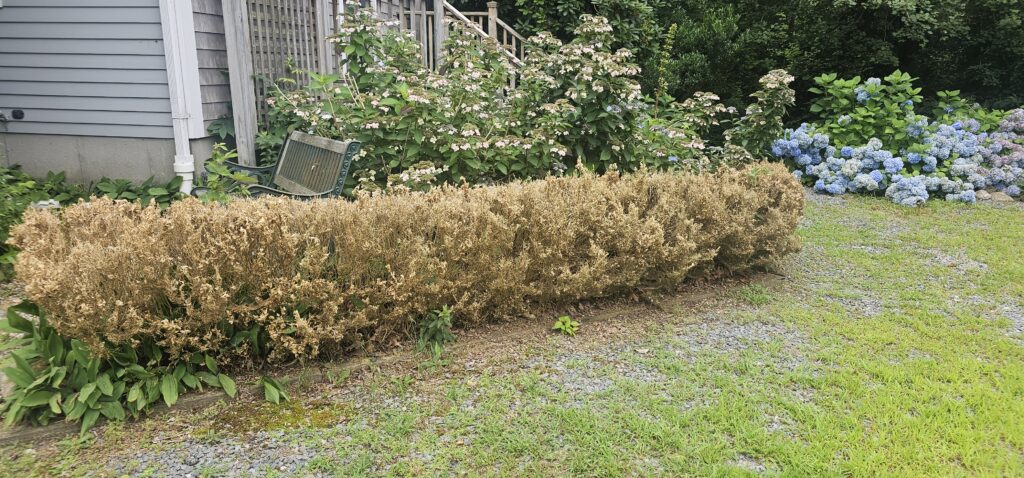
A pest called the box tree moth has been found on Cape Cod, and it’s already damaging boxwood shrubs in several towns. If you have boxwoods in your yard or if you’re a new gardener thinking of planting them, here’s what you need to know to protect your landscape.
What Is the Box Tree Moth?
The box tree moth (Cydalima perspectalis) is a small but mighty pest. It was first spotted in the U.S. in 2021 and showed up in Barnstable County in 2023. Since then, it has caused serious damage to boxwoods in parts of the Upper and Mid Cape.
This moth didn’t start here. It’s native to parts of Asia. Now that it’s in North America, local and federal agencies like the USDA and the Massachusetts Department of Agricultural Resources are working to slow the spread.
Why You Should Care
Boxwoods (Buxus spp.) are one of the most common ornamental shrubs used in Cape Cod landscaping. They’re low-maintenance, evergreen, and popular for hedges, foundation plantings, and formal gardens. But the box tree moth caterpillar eats the leaves. A heavy infestation can kill the entire plant.
If left untreated, these caterpillars can strip your boxwood bare.

What to Look For
Even if your plant looks healthy on the outside, pests could be hiding inside. Check your boxwoods for:
- Webbing (silk threads) inside the foliage
- Frass (insect poop) that looks like tiny green or brown pellets
- Brown or chewed leaves, especially ones with only the edges left
- A general thinning look to the shrub
If you see these signs, it’s time to act fast.
What You Can Do
✔️ Inspect your boxwoods regularly.
Damage can happen quickly and may not be obvious right away.
✔️ Report new infestations.
If you think you’ve found box tree moth in a new area of Cape Cod, contact Cape Cod Cooperative Extension or the Massachusetts Department of Agricultural Resources.
✔️ Remove and destroy heavily infested shrubs.
You can chip them, bury them, or seal them in large plastic bags and leave them in the sun to kill any insects.
✔️ Use the right insect control.
Some pesticides like Bacillus thuringiensis (Bt) work best on young caterpillars. Others, such as pyrethroids or spinosyns, are more effective on older larvae. You may need to treat more than once in a season.
👎 Hand-picking caterpillars usually doesn’t work well since they hide deep inside the shrub.


Thinking of Replacing Your Boxwoods?
If your boxwood has been damaged beyond saving or you want to avoid this pest altogether, consider one of these boxwood alternatives:
- Inkberry holly (Ilex glabra) — Native and well-adapted to Cape Cod
- Japanese holly (Ilex crenata) — Great for hedges
- Bayberry (Myrica pennsylvanica) — Tough and salt-tolerant
- Plum yew (Cephalotaxus harringtonia) — A unique evergreen shrub
Need Help?
Not sure what you’re looking at? We can help.
Contact a Master Gardener through our Hort Helpline at the link www.capecod.gov/hortclinic or at (508) 375-6700.
You can send photos or questions and get expert guidance.
For more information about box tree moth identification and management please check out these resources.
UMass box tree moth fact sheet
Massachusetts Introduced Pest Outreach Box Tree Moth & Reporting
Cornell box tree moth resources
Learn More
Explore more about Cape Cod Cooperative Extension’s work at capecod.gov/extension.