


September Is Emergency Preparedness Month: Cape Cod, Are You Ready?
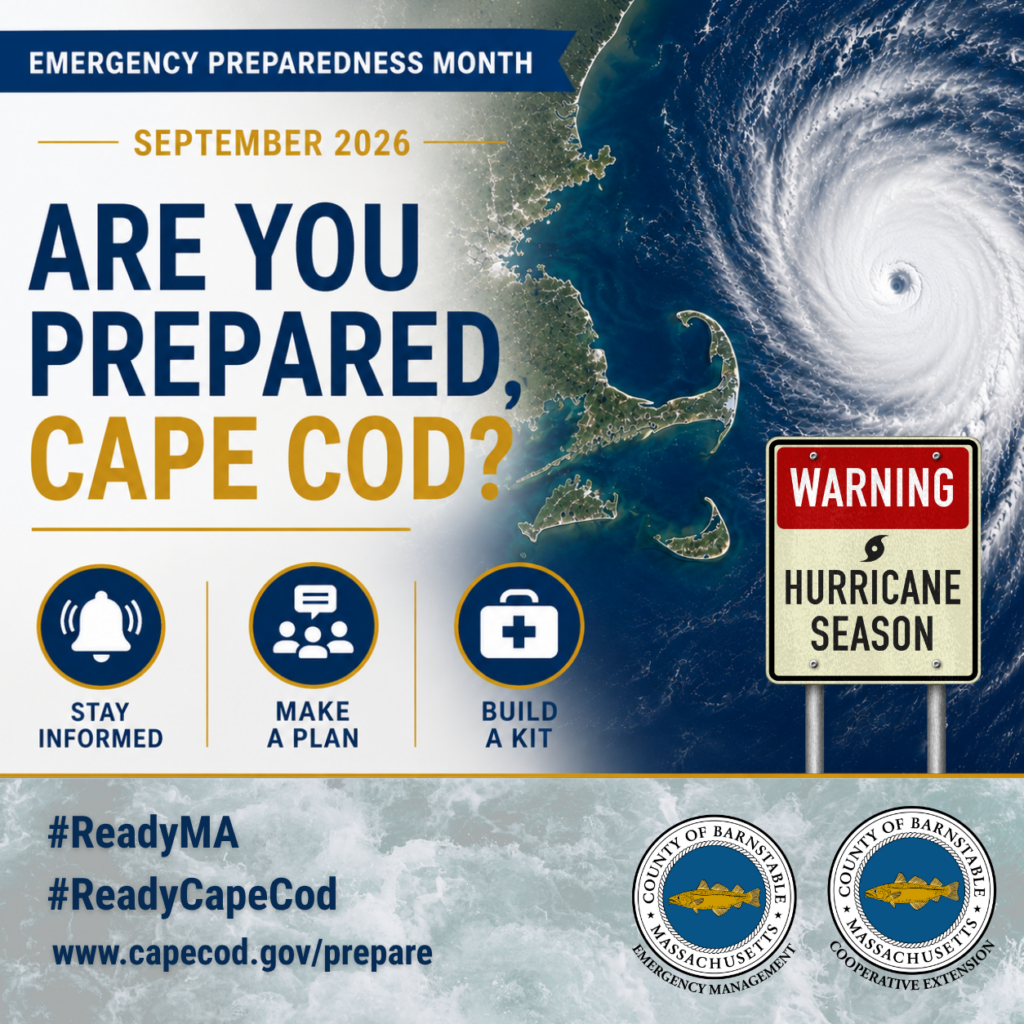


September is Emergency Preparedness Month, and Barnstable County is encouraging residents across Cape Cod to use the month to take a few simple steps to be more prepared for the unexpected.
Throughout September, Barnstable County Emergency Management and Cape Cod Cooperative Extension’s Coastal Processes – Flood & Erosion Program are teaming up on a public awareness campaign focused on practical things residents can do now — before an emergency happens.
The message is simple: preparedness doesn’t have to happen all at once.
Checking your emergency alerts, adding a few supplies to your kit, talking with your family about a plan, learning your evacuation zone, or understanding your home’s flood risk are all meaningful steps toward being better prepared.
Why Preparedness Matters on Cape Cod
Living on Cape Cod means enjoying a unique coastal environment, but our geography also brings particular challenges when emergencies occur.
Hurricanes and tropical storms can bring strong winds, storm surge, flooding, erosion and power outages. Nor’easters and winter storms can disrupt travel and utilities. Extreme heat, severe thunderstorms and other emergencies can also affect our communities throughout the year.
Cape Cod’s geography can make transportation and evacuation more complicated, particularly during widespread emergencies. Knowing what you will do and where you will get reliable information before an emergency occurs can make a real difference.
And September is an especially timely month to prepare: hurricane season continues through November 30, with late August and September historically among the most active periods for tropical weather in Massachusetts.
One Step at a Time
Barnstable County’s Emergency Preparedness Month campaign is designed around actions that can be taken one at a time.
Throughout the month, residents will be encouraged to:
Stay informed. Make sure you have more than one way to receive emergency information. Sign up for your town’s emergency notification system, enable emergency alerts on your phone, and know which official local sources you will turn to during an emergency.
Make or update your emergency plan. Talk with the people in your household about how you will communicate if you are separated, where you might go if you need to leave home, and how you will account for children, older adults, pets, medications or other individual needs.
Build your emergency kit. You don’t have to buy everything at once. Start with what you already have and add an item or two each time you shop. Water, nonperishable food, medications, flashlights, batteries, chargers, first-aid supplies and copies of important documents are good places to start.
Know your evacuation zone. If you live, work or spend time in a coastal or low-lying area, find out whether you are in a hurricane evacuation zone and become familiar with the routes you may need to use.
Know your flood risk. Flooding on Cape Cod can result from storm surge, coastal flooding, heavy rainfall and other conditions. Understanding the risks around your home, workplace and regular travel routes can help you make better decisions before and during a storm.
Prepare your home. Cape Cod homeowners can also take steps to make their properties more resilient to coastal hazards. The Massachusetts Homeowner’s Handbook to Prepare for Coastal Hazards provides practical information to help homeowners understand their risk and identify ways to better protect their homes and property.
Preparedness Is a Community Effort
Emergency preparedness starts at home, but it also extends to our neighborhoods and communities.
Think about the people around you. Does an older neighbor need help preparing for a power outage? Does someone in your family rely on medical equipment or medication that requires special planning? Would a friend or relative need transportation during an evacuation?
A quick conversation now can help identify needs before an emergency happens.
Barnstable County Emergency Management works with emergency management officials from Cape Cod’s 15 towns and regional public safety and response partners to strengthen planning, coordination and preparedness across the region. Residents are an important part of that effort.
The more prepared individuals and households are, the more resilient Cape Cod becomes as a whole.
Take One More Step
Emergency Preparedness Month will end on September 30. Preparedness shouldn’t.
Before the month is over, choose one more thing you can do.
Test your alerts. Add something to your emergency kit. Update an emergency contact. Check your evacuation zone. Look up your flood risk. Talk with a neighbor. Review your family plan.
Then keep going.
Small actions taken now can make a meaningful difference when an emergency happens.
Cape Cod, are you prepared?
Learn more and find preparedness resources from Barnstable County Emergency Management at capecod.gov/prepare.
For information about coastal flooding, erosion, flood risk and ways to make your property more resilient, explore resources from Cape Cod Cooperative Extension’s Coastal Processes – Flood & Erosion Program.
Follow Barnstable County throughout September for more Emergency Preparedness Month tips and resources.
#ReadyMA #CapeCod #ReadyCapeCod