

Why Spring Allergies Feel Worse Every Year
By Marina Tonial, MPH, CHES®
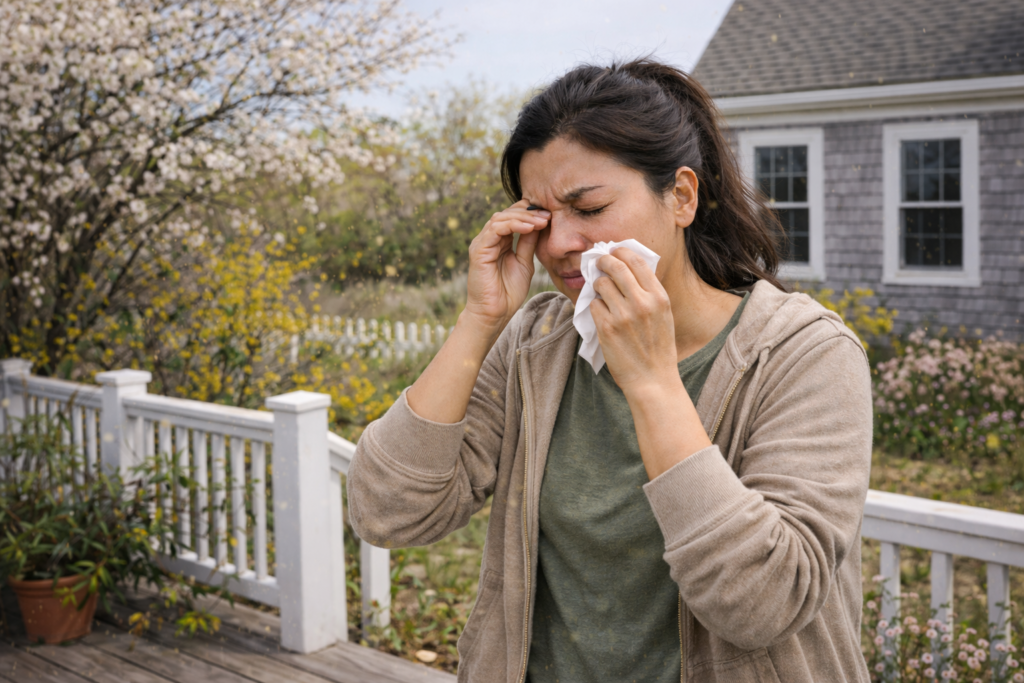
If your allergies seem stronger than they used to be, you’re not imagining it. Many people report longer seasons, heavier symptoms, and medications that don’t seem to work as well anymore. Over the past decade, spring allergy season has gradually expanded — starting earlier and lasting longer.
This isn’t just uncomfortable. It affects sleep, mood, focus, and daily functioning.
What’s changing?
Allergies are triggered when your immune system overreacts to pollen — tiny particles released by trees, grasses, and weeds.
Today, pollen seasons are:
- Starting earlier in the year
- Lasting more weeks
- Producing higher pollen counts
Warmer temperatures and increased carbon dioxide allow plants to grow longer and produce more pollen. In simple terms: plants are thriving, and your immune system notices.
Why symptoms feel stronger
Even if you had mild allergies as a child, they can intensify over time.
Your body builds sensitivity through repeated exposure. Each year your immune system “learns” to react more aggressively to the same pollen — which is why adults often develop allergies later in life.
Common symptoms:
- Sneezing
- Congestion
- Itchy eyes
- Post-nasal drip
- Fatigue
- Brain fog
Many people don’t realize fatigue and irritability are allergy symptoms. Poor sleep from congestion affects concentration, work performance, and mental health.
The sleep connection
Allergies don’t just affect your nose — they affect recovery.
When nasal passages are inflamed:
- You breathe through your mouth
- Sleep becomes lighter
- You wake more often
This leads to daytime tiredness, lower patience, and difficulty focusing. For kids, it can look like hyperactivity rather than fatigue.
What actually helps (beyond medication)
Start treatment early
Begin allergy medication before symptoms peak, not after. Preventing inflammation works better than stopping it.
Control your environment
Small daily habits reduce exposure significantly:
Morning
- Check pollen forecast
- Keep windows closed on high pollen days
After being outside
- Change clothes
- Wash face and hands
- Shower before bed if symptoms are strong
Inside the home
- Use a HEPA filter if possible
- Wash bedding weekly
- Keep pets out of bedrooms during peak season
Outdoor timing matters
Pollen is highest:
- Early morning
- Windy days
- Dry conditions
Better times to be outside:
- After rain
- Late afternoon/evening
Mental health and productivity
Chronic inflammation affects attention and mood. During peak allergy season people often experience:
- Reduced concentration
- More mistakes
- Irritability
- Lower motivation
If you feel “off” every spring, your body may be exhausted from fighting inflammation — not from lack of effort or discipline.
The Bottom Line
Spring allergies are becoming more noticeable because exposure is increasing, not because you’re getting weaker. Treat them early, reduce exposure, and support sleep — your brain will function better within days.
If your symptoms are affecting your sleep, work, or daily life, talk to your doctor or an allergist. Prescription options and allergy testing can offer relief that over-the-counter medications can’t.
Sources and Further Reading
- Proceedings of the National Academy of Sciences – “Anthropogenic climate change is worsening North American pollen seasons” (2021) https://doi.org/10.1073/pnas.2013284118
- Nature Communications – “Projected climate-driven changes in pollen emission season length and magnitude over the continental United States” (2022) https://www.nature.com/articles/s41467-022-28764-0
- U.S. Department of Health and Human Services – “Pollen: Climate Change and Health Equity” (2024) https://www.hhs.gov/climate-change-health-equity-environmental-justice/climate-change-health-equity/climate-health-outlook/pollen/index.html
- Centers for Disease Control and Prevention (CDC) – “Diagnosed Allergic Conditions in Adults: United States, 2021” (2023) https://www.cdc.gov/nchs/products/databriefs/db460.htm
- Harvard Health Publishing – “Sneezy and Dopey? Seasonal Allergies and Your Brain” (2024) https://www.health.harvard.edu/blog/sneezy-emandem-dopey-seasonal-allergies-and-your-brain-202305222937
- Harvard Health Publishing – “New Allergies in Adulthood” (2024) https://www.health.harvard.edu/diseases-and-conditions/new-allergies-in-adulthood
- Brain, Behavior, and Immunity – “Evidence of fatigue, disordered sleep and peripheral inflammation in seasonal allergy” (2018) https://pubmed.ncbi.nlm.nih.gov/29054675/
- Cleveland Clinic – “Tired? You May Be Experiencing Allergy Fatigue” (2025) https://health.clevelandclinic.org/can-allergies-make-you-tired
- Asthma and Allergy Foundation of America (AAFA) – “Allergy Facts and Figures” https://www.aafa.org/allergy/