


Microplastics and Your Health: What You Need to Know
By Marina Tonial, MPH, CHES®, Community Health Educator
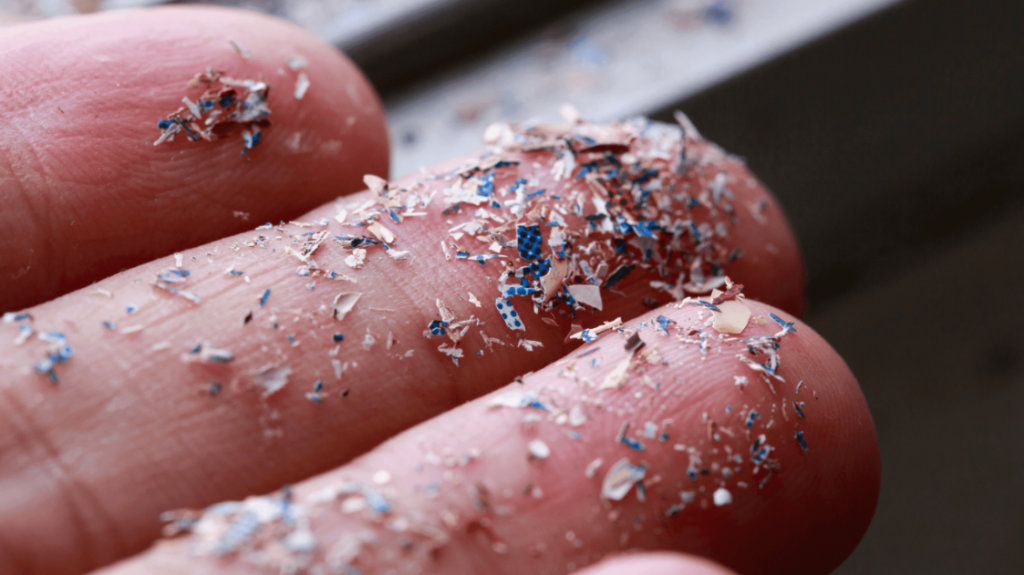
Microplastics are everywhere, in our oceans, our food, our drinking water, and even the air we breathe. These tiny plastic particles can range in size from 5 millimeters down to 1 nanometer (or from about the size of a pencil eraser to 80,000 times smaller than a human hair). These tiny particles have become an unavoidable part of modern life. But what does this mean for your health? Here’s what the science tells us and what you can do to reduce your exposure.
What Are Microplastics?
Microplastics are small plastic fragments that come from two main sources. Primary microplastics are intentionally manufactured to be small, like microbeads in cosmetics or fibers from synthetic clothing. Secondary microplastics result from the breakdown of larger plastic items through weathering, sunlight, and physical wear.
These particles range from barely visible to microscopic, and they’ve been found in seafood, salt, bottled water, tap water, beer, honey, and countless other foods we consume regularly.
How Do Microplastics Enter Our Bodies?
We’re exposed to microplastics through three main pathways:
Ingestion: Research estimates that the average person may consume between 39,000 to 52,000 microplastic particles annually through food and beverages alone. When you add inhalation estimates, this number may exceed 121,000 particles per year.
Inhalation: Microplastic fibers float in indoor and outdoor air. Studies have found microplastics in human lung tissue, suggesting we breathe them in regularly, especially in indoor environments where synthetic textiles and materials are common.
Dermal contact: While less studied, microplastics in personal care products may come into contact with our skin, though absorption through intact skin appears limited.
What Are the Health Concerns?
The health impacts of microplastics are still being researched, but early findings raise important questions:
Chemical exposure: Plastics contain additives like phthalates, bisphenol A (BPA), and flame retardants that can leach into our bodies. Some of these chemicals are known endocrine disruptors that may interfere with hormones.
Physical effects: Microplastics have been detected in human blood, lungs, placenta, and other organs. While we don’t yet fully understand the consequences, the presence of foreign particles in our tissues is concerning.
Inflammation: Laboratory studies suggest that microplastic particles may trigger inflammatory responses in cells and tissues, though more research is needed to understand real-world impacts.
Potential long-term risks: Scientists are investigating whether chronic microplastic exposure might contribute to conditions ranging from respiratory issues to cardiovascular problems, though definitive links are still being established.
What Can You Do?
While we can’t completely avoid microplastics, you can take steps to reduce your exposure:
In the kitchen:
- Choose glass, stainless steel, or ceramic food containers instead of plastic
- Avoid microwaving food in plastic containers
- Use a water filter certified to remove microplastics (reverse osmosis or filters with pore sizes smaller than 1 micron)
- Opt for fresh foods over processed and packaged items when possible
- Choose loose leaf tea over tea bags (some contain plastic)
Around your home:
- Vacuum and dust regularly to reduce airborne microplastic fibers
- Open windows to improve ventilation
- Choose natural fiber clothing, bedding, and furnishings when possible
- Wash synthetic fabrics less frequently and use a microfiber-catching laundry bag
Personal care:
- Read labels and avoid products containing polyethylene or polypropylene microbeads
- Choose cosmetics and personal care products without plastic ingredients
Broader impact:
- Reduce overall plastic use and choose reusable items
- Properly recycle plastics to prevent environmental breakdown
The Bottom Line
We’re still learning about the full health impacts of microplastics, and research is ongoing. While we wait for more definitive answers, taking reasonable precautions to reduce exposure makes sense—especially for children and pregnant women, who may be more vulnerable.
The microplastics issue also reminds us that our personal health is connected to environmental health. By reducing plastic pollution, we protect both ourselves and our planet.
Sources and Further Reading
- National Institute of Environmental Health Sciences (NIEHS) – “Call for applications about microscopic plastics, health effects” (2024)
Environmental Factor – March 2024: Call for applications about microscopic plastics, health effects
- Stanford Medicine – “Microplastics and our health: What the science says” (2025)
https://med.stanford.edu/news/insights/2025/01/microplastics-in-body-polluted-tiny-plastic-fragments.html
- Environmental Working Group – “New study links microplastics to serious health harms in humans” (2024)
https://www.ewg.org/news-insights/news/2024/03/new-study-links-microplastics-serious-health-harms-humans
- Environmental Science & Technology – “Effects of Microplastic Exposure on Human Digestive, Reproductive, and Respiratory Health: A Rapid Systematic Review” (2024)
https://pubs.acs.org/doi/10.1021/acs.est.3c09524
- National Library of Medicine – “Microplastics and human health: unraveling the toxicological pathways and implications for public health” (2025)
https://pmc.ncbi.nlm.nih.gov/articles/PMC12213550/
- ACS Environment & Health – “Potential Health Impact of Microplastics: A Review of Environmental Distribution, Human Exposure, and Toxic Effects” (2023)
https://pubs.acs.org/doi/10.1021/envhealth.3c00052 - Nutrients – “Microplastics: A Real Global Threat for Environment and Food Safety: A State of the Art Review” (2023) Microplastics: A Real Global Threat for Environment and Food Safety: A State of the Art Review – PMC