


NEW! System Shift Series: An I/A System Helps Lessen an Environmental Footprint on Herring Pond in Eastham
System Shift is a new story series focusing on Cape and Islands homeowners who have I/A systems and/or are practicing alternative ways of dealing with human waste. The series also puts a spotlight on pioneers in the world of advanced treatment. What’s it like to have an I/A system? How does it help the local mission to be better land and water stewards? We’ll tackle these questions and more in hopes of helping “shift” the way we see all the moving pieces of Cape Cod’s wastewater puzzle.
By Amy DuFault, MASSTC Communications
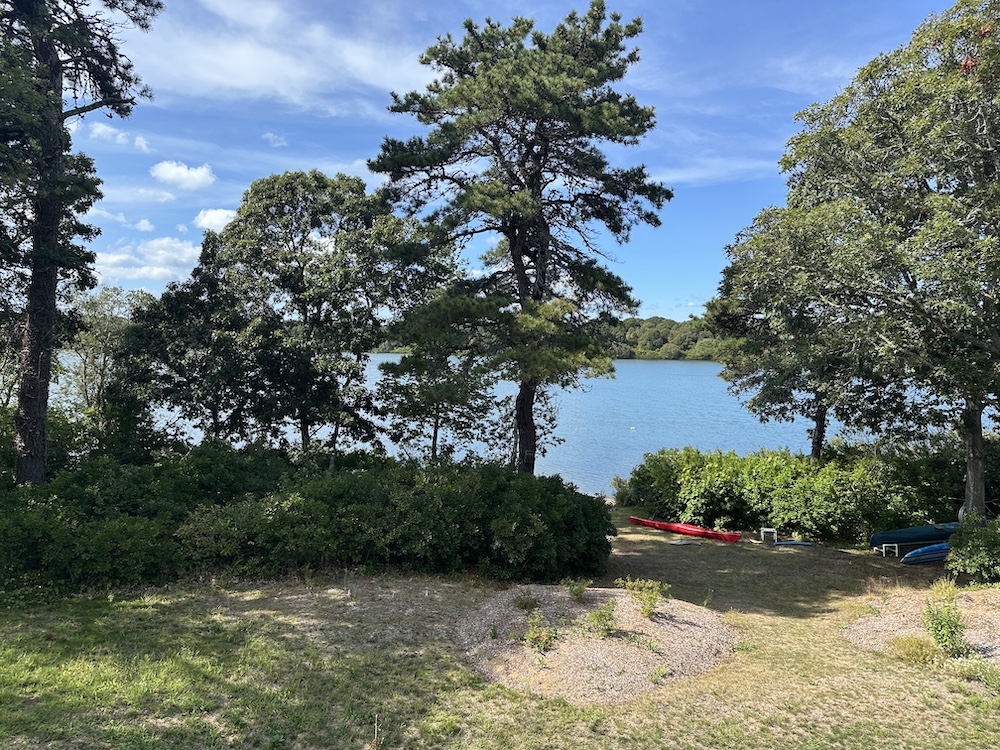
Martin and Ellen Ridge live in Eastham on Herring Pond, a 43-acre natural kettle hole pond in a town that has recently identified there are 278 cesspools. The Ridge’s are motivated to take action.
In addition to having a Fuji Clean Innovative/Alternative System, the Ridge family home, built on just over an acre, has solar panels, they’ve incorporated sustainable building materials and have designed their property to keep water from running off their sandy soil by planting native perennials and doing some creative terracing. Bayberry and High Bush Blueberry saplings cluster around recently planted wildflowers and annuals, a gardening composition that Ellen is happily in charge of. Even the I/A system is part of the plantings serving as a berm of sorts to slow water.
“It’s a near net-zero house the way we’ve designed it,” Martin tells me, proud of the fact it uses no fossil fuels and that the solar has now taken care of their energy needs year over year.
“It’s taken a long time for the towns in Barnstable County to take on the issue of removing the nutrients in wastewater that are negatively impacting our lakes, ponds, and bays,” says Ellen. “The installation of sewer systems and IA systems will contribute to that reduction. It’s disappointing however that these very costly investments are not accompanied by requirements to also eliminate the application of fertilizers, an ongoing and significant source of nitrogen and phosphate.”

As part of a pilot project for I/A systems throughout the town of Eastham, the Ridge family chose the Fuji Clean Innovative/Alternative (IA) septic system as an environmentally friendly upgrade. Designed with multiple chambers housed within a single tank, the system uses biological treatment to deliver high-performance wastewater processing. Most notably, it significantly reduces both phosphorus and nitrogen levels—an essential step in safeguarding Cape Cod’s vulnerable water resources.
With an estimated 85% of Cape Cod homeowners still reliant on septic systems that fail to filter out harmful nutrients like phosphorus and nitrogen, environmental officials are sounding the alarm. These pollutants fuel toxic algae blooms in the Cape’s ponds, lakes, and coastal embayments, putting the region on high alert in the search for effective solutions.

“Unfortunately, these systems are very costly to install and maintain. Perhaps with greater adoption, those costs will come down for individual homeowners, or similar to the recent proposal in Wellfleet, the county and/or individual towns will find a more equitable way to fund the transition from Title 5 systems to sewer and IA systems,” says Ellen, regarding recent news that Wellfleet is considering a town-wide wastewater funding mechanism.
Ellen adds that the change would mean towns taking responsibility for the IA systems across town and charge homeowners a monthly fee, similar to what those on sewer would pay.
“Ultimately, I think that is a much more viable path than relying on individual homeowners to install and maintain these systems.”
For current maintenance, MASSTC’s Septic Utility Program (SUP), does monthly system checks on the Ridge’s Fuji system to make sure it’s functioning properly. Martin says in addition to the SUP team, the Fuji team is also there monthly to make sure the system is running properly as it’s still in “provisional use” which means it requires more testing before it can be approved for general use.
Learn more about MassDEP’s 4 categories of approval here.
Martin is currently on Eastham’s Task Force on Zoning & Regulation, a very active group that is basically designing what the future is going to look like in Eastham re: building heights, how close the buildings are to the road, and what the architecture will look like. Good design will lead what happens environmentally with the town now and in the future.
While Herring Pond has experienced algae issues, specifically toxic cyanobacteria blooms in the past, advisories have not been issued for 2025. Though at this visit with the Ridges, benthic algae blooms appearing as mats, framed the pond in clumps on their shoreline. Evidence that the care for this pond will require much more than one family doing their environmental best for a fragile body of water.
Read more from the System Shift series here.