


Air Quality on Cape Cod: What You Should Know
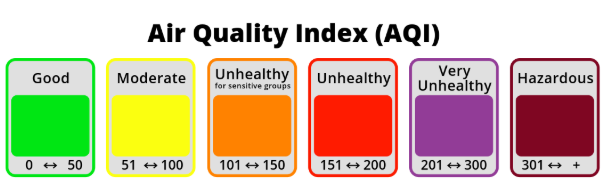
July 29, 2025: Air Quality Alert for Ground Level Ozone
The Massachusetts Department of Environmental Protection has issued an Air Quality Alert for Ground Level Ozone, from 11 AM to 11 PM EDT Wednesday.
An Air Quality Alert means that Ground Level Ozone concentrations within the region may approach or exceed levels that are unhealthy for sensitive groups. Currently, ozone levels are at moderate levels.
Air is unhealthy for sensitive children and adults, such as those with asthma, lung or heart disease, and older adults. Sensitive children and adults should limit prolonged outdoor activity.
At-Risk Groups
For some at-risk groups, including older adults, children, pregnant women and people with heart or lung conditions (i.e. asthma, COPD, heart disease, etc.), it’s important to know where to find air quality information and updates and when to limit outdoor exposure and/or wear a mask that filters fine particulates.
Air Quality Index (AQI) Guidance
The U.S. Air Quality Index, or AQI, is EPA’s tool for communicating daily air quality. It uses color-coded categories and provides statements for each category that tell you about air quality in your area, which groups of people may be affected, and steps you can take to reduce your exposure to air pollution. It’s also used as the basis for air quality forecasts and current air quality reporting.
If you want to check the AQI for a different region (these widgets are set to indicate real-time air quality for Barnstable), visit AirNow.gov.
The following graph shows air quality trends for our area:
| AQI Range | Air Quality Condition | Public Health Recommendations |
| 🟢 (green) 0–50 | Good | No precautions necessary |
| 🟡 (yellow) 51–100 | Moderate | Unusually sensitive individuals should limit outdoor exertion |
| 🟠 (orange) 101–150 | Unhealthy for Sensitive Groups | Sensitive individuals should avoid prolonged outdoor activity |
| 🔴 (red) 151–200 | Unhealthy | Everyone should limit prolonged outdoor exertion |
| 🟣(purple) 201+ | Very Unhealthy to Hazardous | Everyone should stay indoors and avoid all outdoor activity |
The ranges of numbers in the Air Quality Index (AQI) range refer to PM 2.5 (PM is for particulate matter), or fine inhalable particles with diameters of 2.5 micrometers or smaller. These particles, which are 30 times smaller than the width of a human hair, are a primary component of wildfire smoke and can:
- Penetrate deep into the lungs
- Enter the bloodstream
- Cause or exacerbate health problems
Exposure to elevated PM 2.5 levels may cause:
- Eye, nose, and throat irritation
- Coughing, wheezing, or shortness of breath
- Triggering asthma or COPD symptoms
- Increased risk of heart attacks or strokes
- Aggravation of chronic heart or lung diseases
- Increased risk of early death in sensitive populations
Helpful Resource: Air Quality Guide for Particle Pollution (infographic)
Protective Actions
On days when the air quality is orange, red, purple or maroon, the American Lung Association recommends the following:
- Reduce the time you spend outdoors when the AQI value is high. Also, reduce the intensity of outdoor activity. According to the EPA, the chances of being affected by unhealthy levels of air pollution increase the longer a person is active outdoors and the more strenuous the activity.
- If you must go outdoors, consider wearing a mask. Unfortunately, not all masks provide adequate protection against particle pollution. Cloth or dust masks, for instance, may not effectively filter out fine particles. However, well-fitted N95 or KN95 masks have better filtration capabilities and may be beneficial on days when the AQI level of concern is high.
- Keep your air indoors healthy by keeping the windows and doors closed. Run air conditioning on the recirculate setting, use a portable HEPA air cleaner or, if it is difficult to maintain clean air in your entire house, create a clean room.
Check out other clean air resources on the American Lung Association website >>>
If you experience new or recurring symptoms that worry you, speak with your healthcare provider. For non-urgent concerns, you can reach out to the Lung HelpLine at 1-800-LUNGUSA to get your questions answered on the impact wildfire smoke has on the lungs.
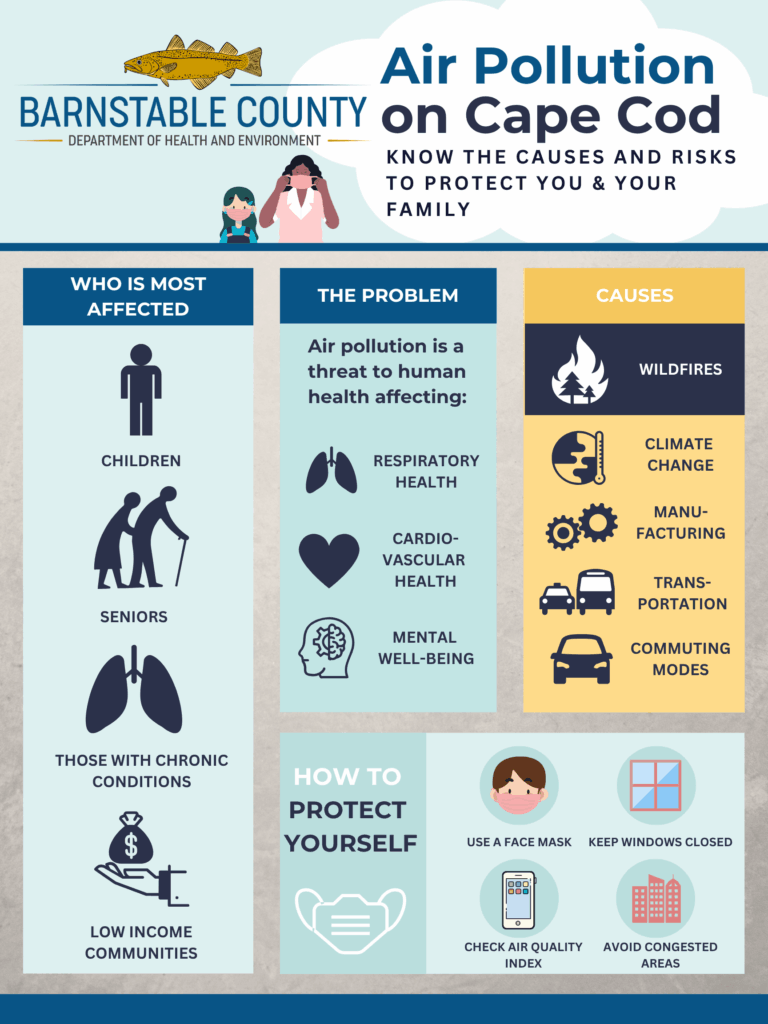
Air Pollution on Cape Cod Infographic
Additional Resources
| Resource | Description | Link |
| AirNow.gov | Official U.S. air quality site. Real-time AQI, forecasts, and wildfire smoke tracking. | airnow.gov |
| MassDEP | MassAir | Massachusetts Department of Environmental Protection’s local air quality portal. | MassAir |
| PurpleAir | Community-run network of low-cost sensors. Highly localized air quality data | purpleair.com |
| IQAir | Global air quality tracker with health recommendations and pollution breakdowns. | iqair.com |
| EPA: Smoke-Ready Toolbox | Tools, fact sheets, and outreach materials for communities. | epa.gov/smoke-ready-toolbox |
| Asthma & Allergy Foundation of America (AAFA) | Tips for people with asthma or allergies during poor air quality days. | aafa.org |
| American Lung Association | Resources for lung health, including smoke exposure prevention. | Protecting Yourself from Poor Air Quality: Answering FAQs to help you understand AQI | American Lung Association |