

Keep your Dogs Safe: What You Should Know about Harmful Algae in Ponds
Dogs are more than pets; they’re part of the family. They ride in our cars, sleep in our beds, and follow us just about anywhere. Some dogs absolutely love swimming, and on a hot summer day, it can seem like the perfect way for them to cool off.
But not all water is safe, especially during the warmer months. Hot weather, still water, and certain nutrients in lakes and ponds can create perfect conditions for a dangerous type of bacteria called cyanobacteria to grow.
What Are Cyanobacteria?
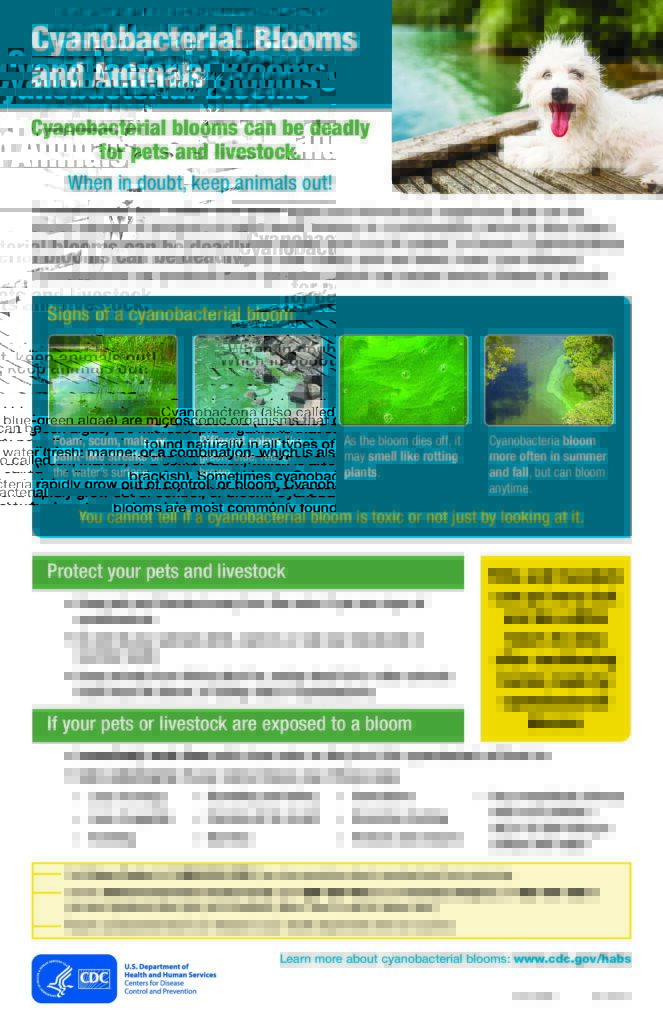
Cyanobacteria, also known as blue-green algae, are tiny organisms that live in water. They’re naturally found in ponds, lakes, and even some streams. When the conditions are right (warm water, little movement, and lots of nutrients), they can grow quickly and form harmful algae blooms, or HABs.
These blooms often look like thick green paint, foam, or scum on the surface of the water. While not all cyanobacteria are toxic, it’s almost impossible to tell the dangerous ones apart just by looking. Some types can produce toxins like microcystins or anatoxins, which are dangerous to both people and animals.
Why Are Cyanobacteria Dangerous for Dogs?
Unfortunately, dogs are especially at risk because they drink the water and/or lick their fur after swimming. Even a small amount of the toxin can make a dog seriously sick or even lead to sudden death.
Recommendations from a Local Veterinarian
Barnstable County Department of Health and Environment’s Disease Case Investigators spoke with retired Cape Cod veterinarian Dr. Larry Venezia, who has seen firsthand how dangerous cyanobacteria toxicity can be. He explained that treating dogs exposed to cyanobacteria is very difficult. The symptoms aren’t always obvious and can look like other types of poisoning. Most often, vets can only offer supportive care and treat symptoms like vomiting, diarrhea, weakness, or seizures. Even with the best care, some dogs may still suffer from organ failure and not survive.
What to Watch For
If your dog has been swimming and starts to show any of these symptoms within minutes or hours, seek emergency veterinary care right away:
- Vomiting or diarrhea
- Weakness or collapse
- Tremors or seizures
- Difficulty breathing
- Yellowing of the skin or eyes (a sign of liver damage)
How to Safely Enjoy Ponds with Your Dog
The good news is that you can still enjoy nature with your furry friend if you take a few safety steps:
- Avoid water that looks strange. If the water looks like green paint, has foam or scum on top, or smells bad, don’t let your dog (or yourself) go in. Remember this mantra: “WHEN IN DOUBT, STAY OUT!”
- Keep your dog on a leash near ponds or lakes, especially in the summer or after heavy rain, when blooms are more common.
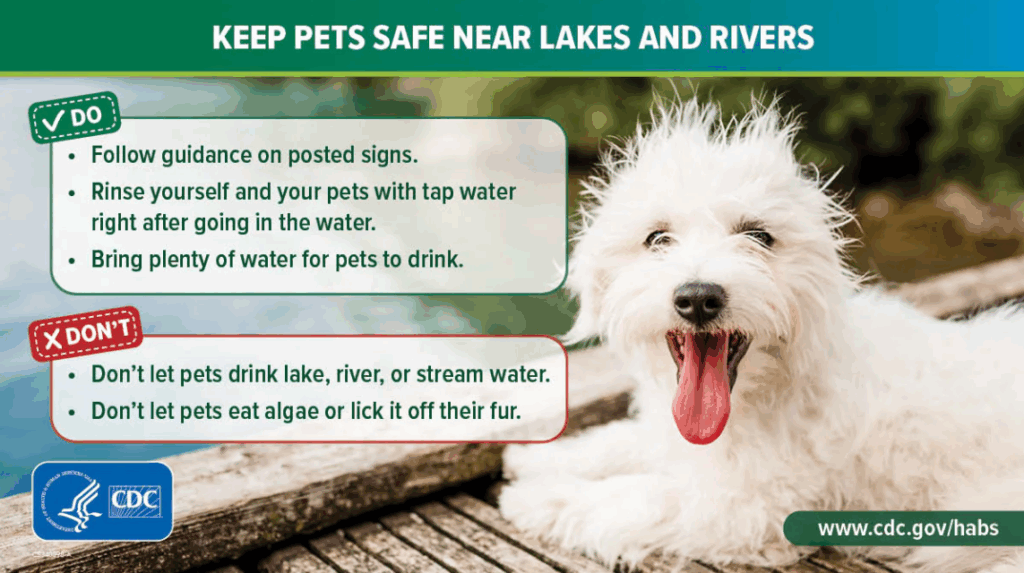
- Bring fresh water for your dog to drink. Don’t let them drink from ponds or lakes, even if the water looks clean.
- Rinse your dog off right away if they accidentally swim in questionable water. Use clean water and try to keep them from licking their fur.
What to Do If You Think You’ve Found a Bloom
If you see water that might have a cyanobacteria bloom:
- Keep yourself and your dog away from the water.
- Take a photo of the water and note the name of the pond or lake.
- Report the bloom to your local health department.
- You can also email the photo and pond name to the Association to Preserve Cape Cod (APCC) at [email protected].
By staying informed and alert, you can help keep your dog safe while still enjoying the outdoors. When in doubt, stay out and keep your furry friends out too.
Additional Resources
Cyanobacteria | Association to Preserve Cape Cod: Cyanobacteria Monitoring Map
Association to Preserve Cape Cod: Sign Up for Cyanobacteria Alerts
Cyanobacteria | Association to Preserve Cape CodDeadly to Dogs, Harmful to Humans: Cape Cod’s Cyanobacteria Crisis on Vimeo
— Article Written by Francesca Gonnella, CARE Resource Coordinator, Reportable Disease Case Investigator