


Holiday Food Safety: Simple Tips for a Safe, Cozy Season on Cape Cod
~By Kim Concra, Nutrition & Food Safety Specialist, Barnstable County Cape Cod Cooperative Extension
The holidays on Cape Cod bring out the best things in life: family, friends, good food, and kitchens that smell like cinnamon, butter, and something roasting in the oven. After raising three kids and hosting more winter meals than I can count, I know that nothing brings people together faster than a warm dish on a cold Cape Cod day.
I also know one thing can ruin the fun faster than a nor’easter: food poisoning.
Luckily, keeping your holiday food safe does not require perfection. It only takes a few simple steps that make a big difference. Whether you are hosting, baking with grandkids, traveling to a potluck, or reheating leftovers after a busy week, here is how to keep everyone safe and well fed from Thanksgiving through New Year’s.
The Four Basics: Clean, Separate, Cook, Chill
Food safety really does come down to these four habits. They are easy, and they work.
Clean: Wash your hands and your space
Germs love kitchens, especially during the busy holiday season.
Do this:
- Wash your hands for at least 20 seconds with soap and warm or cold water before, during, and after preparing food and before eating. Always wash hands after handling uncooked meat, chicken and other poultry, seafood, flour, or eggs.
- Clean cutting boards, utensils, knives, and countertops with hot, soapy water after each task.
- Rinse fresh fruits and vegetables under running water.
Separate: Keep raw foods away from ready to eat foods
Cross contamination is sneaky: Raw meat, chicken and other poultry, seafood, and eggs can spread germs to ready-to-eat food unless you keep them separate.
Make it easy:
- In the grocery cart, keep raw meat and poultry in separate bags.
- Store raw meat on the bottom shelf of the fridge in sealed containers.
- Use one cutting board for raw proteins and another for bread, produce, and baked goods.
- Skip washing raw chicken or turkey. Washing these foods can spread germs to other foods, the sink, and the counter and make you sick. If you choose to wash chicken, do so as safely as possible (see steps).
Cook to the right temperature.
Color and texture cannot tell you if food is safe. A food thermometer is the only reliable way.
- Use a food thermometer to ensure foods are cooked to a safe internal temperature. Learn how to place the thermometer correctly in different food to get an accurate reading.
- Microwave food thoroughly: Follow recommended cooking and standing times. Letting food sit for a few minutes after microwaving allows cold spots to absorb heat from hotter areas and cook more completely.
- Know your microwave’s wattage. Check inside the door, owner’s manual, or manufacturer’s website. If your microwave is high wattage (800 watts or more), use the minimum cooking time recommended. If it is low wattage (300–500 watts), use the maximum cooking time recommended.
- When reheating, use a food thermometer to make sure that microwaved food reaches 165°F.
Chill: Refrigerate quickly.
Cold slows germs down, but only if we use it right. Bacteria can multiply rapidly if left at room temperature or in the “Danger Zone” between 40°F and 140°F.
- Keep your refrigerator at 40°F or below and your freezer at 0°F or below, and know when to throw food out before it spoils. If your refrigerator doesn’t have a built-in thermometer, keep an appliance thermometer inside it to check the temperature.
- Package warm or hot food into several clean, shallow containers and then refrigerate. It is okay to put small portions of hot food in the refrigerator since they will chill faster.
- Refrigerate perishable food (meat, seafood, dairy, cut fruit, some vegetables, and cooked leftovers) within 2 hours. If the food is exposed to temperatures above 90°F, like a hot car or picnic, refrigerate it within 1 hour.
- Thaw frozen food safely in the refrigerator, in cold water, or in the microwave. Never thaw food on the counter because bacteria multiply quickly in the parts of the food that reach room temperature.
Turkey safety tips
If you are roasting a turkey this season, take a moment to review the latest guidelines for thawing, prepping, cooking, and storing it safely.
All of our specific turkey safety information is available here.
Food Internal Temperature Chart for Cooking
Cooking food items at high temperatures kills harmful germs that cause food-borne illnesses. Use the guidelines below from FoodSafety.gov for cooking raw meat, poultry, seafood and other foods to a safe minimum internal temperature. Always use a food thermometer to determine the temperature. Additionally, some meats need to rest before being cut and served to be fully cooked and retain the best flavor.
| Product | Minimum Internal Temperature & Rest Time |
|---|---|
| Beef, Pork, Veal & Lamb Steaks, chops, roasts | 145 °F (62.8 °C) and allow to rest for at least 3 minutes |
| Ground Meats | 160 °F (71.1 °C) |
| Ground Poultry | 165 °F |
| Ham, fresh or smoked (uncooked) | 145 °F (62.8 °C) and allow to rest for at least 3 minutes |
| Fully Cooked Ham (to reheat) | Reheat cooked hams packaged in USDA-inspected plants to 140 °F (60 °C) and all others to 165 °F (73.9 °C). |
| All Poultry (breasts, whole bird, legs, thighs, wings, ground poultry, giblets, and stuffing) | 165 °F (73.9 °C) |
| Eggs | 160 °F (71.1 °C) |
| Fish & Shellfish | 145 °F (62.8 °C) |
| Leftovers | 165 °F (73.9 °C) |
| Casseroles | 165 °F (73.9 °C) |
Baking Safely: Yes, even during cookie season
Cookie swaps, gingerbread houses, and holiday baking are fun for all ages, but raw dough is risky. Flour is a raw food and raw eggs can contain Salmonella. With all the holiday baking going on it’s a good time to review baking food safety and how to handle raw ingredients.
Raw dough can contain germs that make you sick
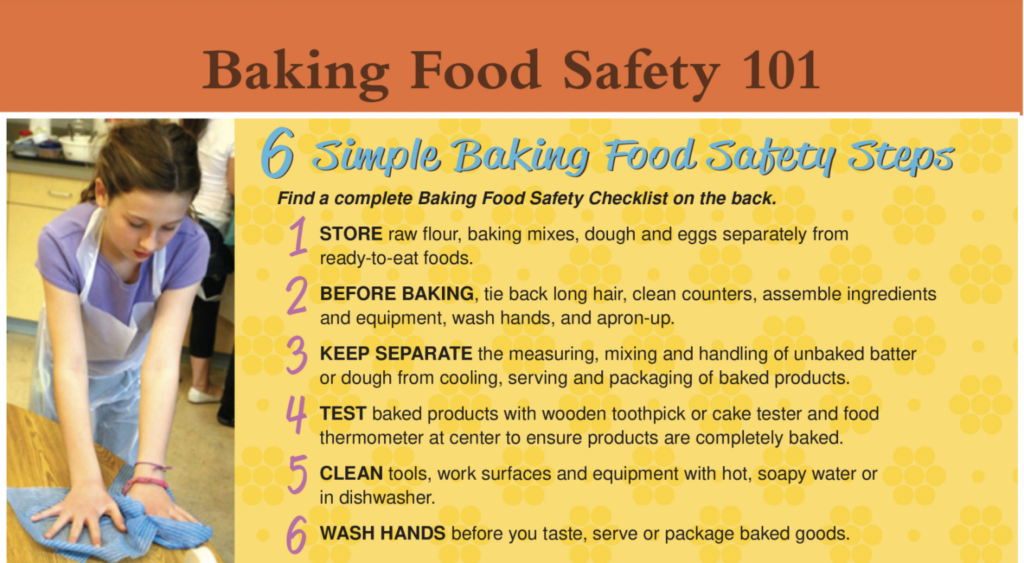
Flour doesn’t look like a raw food, but most flour is raw. That means it hasn’t been treated to kill germs that cause food poisoning, such as Escherichia coli (E. coli) and Salmonella. These harmful germs can contaminate grain while it’s still in the field or flour while it’s being made. Steps like grinding grain and bleaching flour don’t kill harmful germs—and these germs can end up in flour or baking mixes you buy at the store. You can get sick if you eat unbaked dough or batter made with flour containing germs. Germs are killed only when flour is baked or cooked.
Raw eggs are another ingredient in dough and batter that can make you or your loved ones sick. Raw and lightly cooked eggs can contain Salmonella, a germ that causes food poisoning. Find out how to handle and cook eggs properly.
Some companies make edible cookie dough and brownie batter that you can find in stores. These products are made with heat-treated flour and pasteurized eggs or no eggs. Read the label carefully to make sure the dough is meant to be eaten without baking or cooking.
Stay safe when handling flour and eggs
Follow these practices to prevent food poisoning when you are baking and cooking with flour and eggs.
- Do not taste or eat any raw dough or batter. This includes dough or batter for cookies, brownies, cakes, pie crusts, tortillas, pizza, biscuits, pancakes, or crafts made with raw flour, such as homemade play dough or holiday ornaments.
- Do not let children play with or eat raw dough, including dough for crafts.
- Bake raw dough (such as cookie dough) and batter (such as cake mix) before eating.
- Follow the recipe or package directions for cooking or baking. Use the temperature and cooking time given in the recipe or directions.
- Do not make milkshakes with products that contain raw flour, such as cake mix.
- Do not use raw homemade cookie dough in ice cream.
- Cookie dough ice cream sold in stores contains dough that has been treated to kill harmful germs.
- Keep raw foods, such as flour and eggs, separate from ready-to-eat foods. Because flour is a powder, it can spread easily.
- Follow label directions to refrigerate products containing raw dough or eggs until they are baked or cooked (for example, store-bought cookie dough).
- Clean up thoroughly after handling flour, eggs, or raw dough.
- Wash your hands with soap and water after handling flour, raw eggs, or any surfaces they have touched.
- Wash bowls, utensils, countertops, and other surfaces with hot, soapy water.
Traveling with Food: keep hot foods hot and cold foods cold
Whether you are bringing appetizers to a work potluck or side dishes to a family gathering, it’s important to maintain the temperature of your food during transport. All cold dishes should be kept in a cooler with ice to keep them at or below 40°F. All hot dishes should be kept in an insulated bag or wrapped in towels and newspaper to keep them at or above 140°F.
Bacteria can grow quickly when food is between 40°F and 140°F, so perishable leftovers should be put away in the refrigerator or freezer within two hours. If perishable food is left out for more than two hours, it should be thrown out. If you are unsure of the best way to store leftovers, visit the FoodKeeper App. The FoodKeeper App helps you enjoy food items at their peak freshness.
Still have questions? I am here to help!
Food safety does not need to feel overwhelming. If you have questions about recipes, leftovers, or safe cooking temperatures, reach out anytime at [email protected] or check out Extension’s nutrition website at www.capecod.gov/nutrition.
From my Cape Cod kitchen to yours,
Kim
Cape Cod Cooperative Extension: Working for You
Follow Cape Cod Cooperative Extension on Facebook and Instagram for resources, updates, and events.
Learn more about all our programs at capecod.gov/extension.