

Leave the Leaves or Not: How to Help Pollinators and Avoid Ticks on Cape Cod
How Cape Cod Residents Can Help Pollinators and Reduce Tick Risk
By Escher Cattle, Cape Cod Cooperative Extension Educator, Horticulture and Entomology
Every fall on Cape Cod, the same debate pops up.
Should we leave the leaves for the pollinators, or clear them to avoid ticks?
You do not have to choose. With a few smart moves, you can help native insects and keep your yard safer for people and pets.
Why “Leave the Leaves” Matters
Groups such as the USDA, the Xerces Society for Invertebrate Conservation, and the National Wildlife Federation all work to protect pollinators and healthy habitats. These organizations encourage people to keep some leaf litter on the ground to support the insects that rely on it for winter shelter. A natural layer of leaves protects overwintering butterflies and native bees, feeds the soil, and reduces yard waste. It is an easy way to support wildlife without adding anything new.
But those same leaves also create sheltered hiding spots for ticks. That is where things get complicated.
Where Ticks Fit Into the Picture
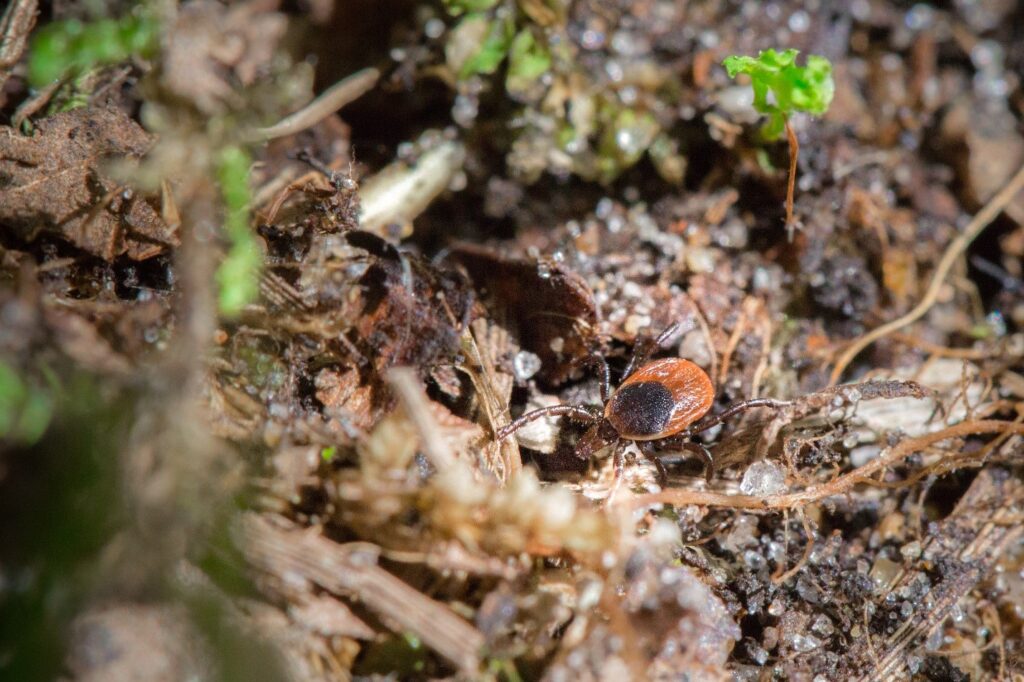
Cape Cod has one of the highest Lyme disease rates in the United States. Blacklegged or deer ticks survive winter especially well in cool and damp places. Leaf litter creates the exact conditions they prefer. A 2020 study found more than three times as many deer tick nymphs in areas with deeper leaf piles compared to spots where leaves had been removed.
This does not mean you need a perfectly clean yard. It simply means that where leaves stay matters.
When Ticks Are Active on Cape Cod

Ticks are active throughout the year. Deer ticks stay active in every season. Adult ticks are active in fall and winter. Nymphs, which are the size of a poppy seed, peak in late spring and summer.
Pollinators and Ticks: Understanding the Tension

Helping pollinators often means allowing your yard to stay slightly wild. Preventing ticks often means keeping high-use areas neat and dry. The good news is that you can do both by placing leaves where they will help wildlife and not create risk for people.
The Cape Cod Way to Handle Leaves
Here is the simple approach. Keep the leaves, but keep them away from places where people spend time.
Look at how your yard is used. Walkways, patios, entry areas, dog paths, and children’s play spots should stay leaf-free. You are not removing leaves from your property. You are moving them to spots where people rarely go.
Choose a quiet part of the yard and let it stay natural. This can be behind the shed, along a fence, under shrubs, or on the far edge of the property. This becomes your pollinator zone. Butterflies, native bees, fireflies, and other beneficial insects use these areas for winter shelter.
If you have more leaves than one zone can handle, put them to work. Mulch them into garden beds to improve soil. Start a compost pile in a low-use corner. These options support insects without giving ticks a comfortable place near your home.
Pollinators do not rely on leaf litter alone. Leaving flower stems through winter, planting native trees and shrubs, or adding a bee house with removable tubes also creates habitat without increasing tick concerns.
Staying Protected All Year
- Wearing permethrin-treated clothing and tucking pant legs and sleeves into socks and gloves is a great first line of defense. Permethrin can be found at most major garden centers on the Cape.
- Wear repellent containing 20-30% DEET on exposed skin when spending time outdoors. Just make sure to reapply according to directions.
- Picaridin and oil of lemon eucalyptus are also effective tick repellents that are safe to use on skin.
- Vaccinate and pre-emptively protect your pets for Lyme Disease and ticks if they spend time outdoors. Consult your veterinarian for what works best for you and your pets.
- Perform daily tick checks on yourself, your family, and your pets after being outdoors. You can remove unattached ticks from your clothes or body with a lint roller or in the shower after you come inside.
If you remove an attached tick, have it tested. Barnstable County partners with TickReport.com to offer free basic testing for Cape Cod residents and reduced prices for advanced tests.
The Bottom Line
You do not need a perfect lawn to support pollinators.
You do not need bare ground to avoid ticks.
You do not need to choose one or the other.
With a few thoughtful choices about where leaves stay in your yard, you can protect wildlife, keep your family safe, and support a healthier Cape Cod.
Still have questions? I am here to help.
Tick safety and yard care do not need to feel confusing. If you have questions about ticks, insects, or how to manage your yard in a safe and pollinator-friendly way, reach out anytime at escher.cattle@capecod.gov or visit Extension’s tick and insect page at www.capecod.gov/ticks.
Cape Cod Cooperative Extension: Working for You
Follow Cape Cod Cooperative Extension on Facebook and Instagram for:
- practical home and yard tips
- tick and insect updates
- seasonal resources
- free programs and workshops
Learn more about all our programs at capecod.gov/extension.